Finding ways to have fun with your Rottweiler does not have to mean buying expensive equipment or planning an exhausting outing. A slow walk with plenty of sniffing, a short search game or a few minutes learning something new can give you both a welcome change of pace.
The best activity is one your dog actually enjoys. Some Rottweilers love retrieving; others would rather investigate a patch of grass or carry a favorite toy. Choose the game around your dog’s age, health and confidence, and finish while they are still comfortable—not when they are too tired to continue.
1. Turn an Everyday Walk Into a Small Adventure
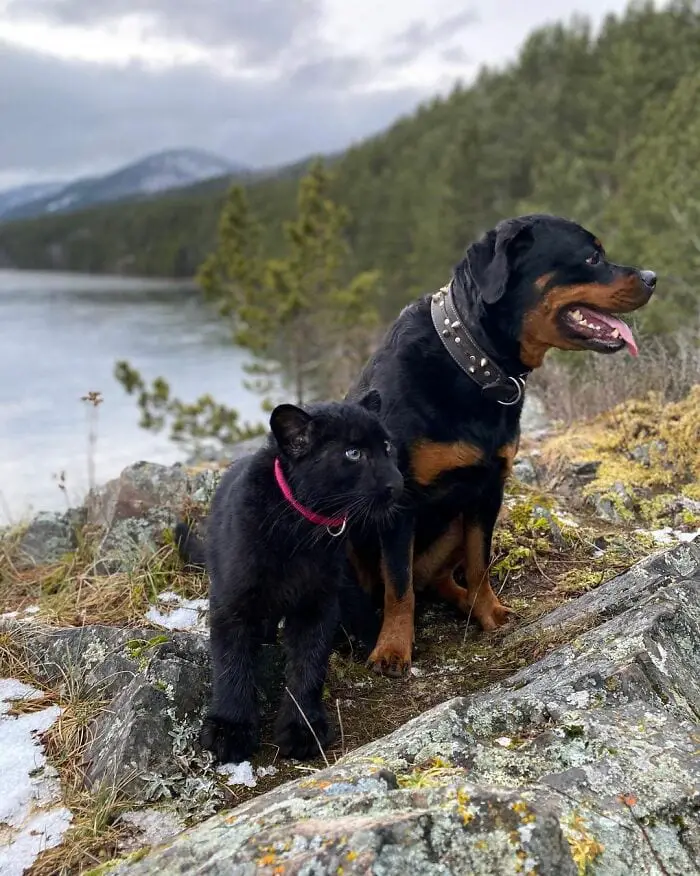
You do not need a mountain trail to make a walk interesting. Try a quieter street, explore a dog-friendly park or allow extra time at a familiar place your Rottweiler usually has to hurry past. Letting your dog investigate smells makes the outing about more than covering distance.
Keep your dog on a suitable lead where required, and choose enough space to move away from unfamiliar dogs, traffic or anything that worries them. An adventure should not become a test of how much noise or crowding your dog can tolerate.
- Take drinking water and choose cooler conditions.
- Check the surface for sharp objects, slippery patches and hot pavement.
- Start with an easy route rather than a long hike your dog has not built up to.
- Turn back if your dog slows down, limps or seems uncomfortable.
For a puppy, senior dog or a Rottweiler with a health condition, ask your veterinarian what activity level is appropriate. There is no single distance that suits every dog.
2. Play a Simple Find-It Game
Search games are useful when the weather keeps you indoors or your dog needs a quieter activity. Start with a few pieces of their usual food on a clear, easy-to-reach surface. Say “find it” and let your Rottweiler investigate without repeatedly pointing out each piece.
Once they understand, place the food in slightly less obvious spots within the same small area. Keep the challenge achievable. If your dog looks confused, make the next round easier instead of letting frustration build.
You can use a favorite toy instead of food. Let your dog watch you place it behind a nearby object, then invite them to find it. Gradually make the hiding place less obvious, but never put rewards near cables, cleaning products, fragile objects or somewhere your dog must climb unsafely.
Supervise the game, count food rewards as part of the day’s intake and play separately if dogs compete over food or toys. The aim is a satisfying little search, not a race between pets.
3. Try an Easy Round of Hide-and-Seek
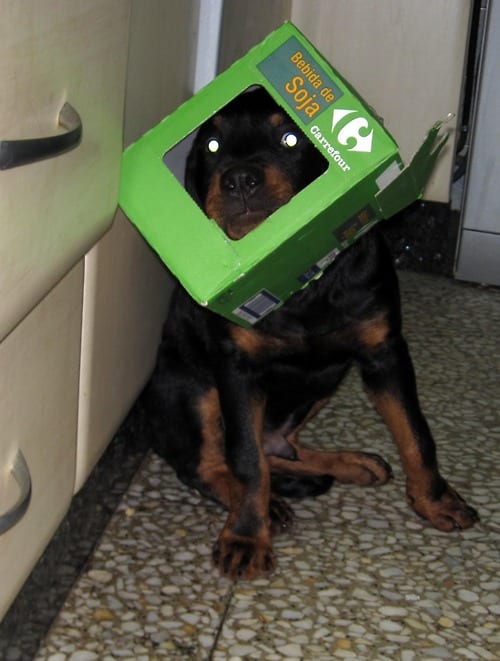
Hide-and-seek turns coming when called into something enjoyable. Begin indoors or in a securely enclosed area. Have another familiar adult stay with your dog while you step a short distance away, then call once in a cheerful voice.
At first, stay partly visible. When your Rottweiler reaches you, offer praise, a toy or a small reward they enjoy. Repeat from another easy location. Only make the game harder after your dog understands what to do.
Avoid hiding where your dog has to jump, squeeze through a gap or rush down slippery stairs. Do not use this game to leave an anxious dog alone unexpectedly. If they become worried when you disappear, remain visible and practice shorter distances.
Children can help with adult supervision, but should not run away from an excited dog or encourage chasing and grabbing clothes. Keep arrivals calm enough that everyone can enjoy the game.
4. Teach One Small Skill Together
A training game does not need to look impressive. Touching your hand with their nose, going to a mat or placing a toy in a basket can be a rewarding shared project. Pick one small action and reward an easy first step.
For a hand target, offer an empty hand close enough for your dog to investigate. Mark a gentle nose touch with “yes” and reward it. After a few successful repetitions, take a break. Build the skill gradually instead of repeating a cue your dog has not learned.
Keep sessions brief and use a non-slip surface. Skip tricks that require awkward balancing, repeated jumping or movements your dog finds difficult. A calm response to a familiar cue is a perfectly good achievement.
If you keep running into the same difficulty, our guide to common Rottweiler training mistakes explains how to make practice clearer and more manageable.
5. Keep Tug and Fetch Controlled

If your Rottweiler enjoys tug, use an appropriate dog toy that keeps your hands away from their mouth. Let them take it on cue and practice exchanging it for another toy or reward. Pause when teeth touch skin, the toy starts falling apart or the game becomes too difficult to manage.
Keep your dog’s feet on the ground and avoid lifting them by the toy or making sharp jerking movements. Short rounds with breaks are more useful than trying to play for hours. If your dog stiffens over a toy, guards it or cannot comfortably disengage, stop and get qualified help rather than turning it into a contest.
For fetch, choose a toy too large to swallow and an enclosed, level space. Start with short, low throws rather than repeated high leaps and sudden turns. Not every dog wants to retrieve; offering another game is better than repeatedly throwing a ball they ignore.
Avoid laser-pointer games. Unlike a toy, the light cannot be caught, and some dogs keep searching for it after play ends. The American Kennel Club explains the frustration laser play can cause. Choose something your Rottweiler can actually find, hold or receive instead.
6. Offer Water Play Only If Your Dog Enjoys It
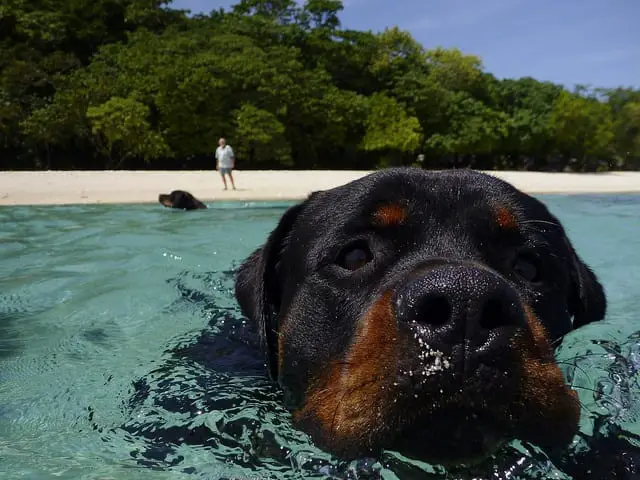
Water is an option, not a requirement. Being a strong, muscular Rottweiler does not automatically make a dog a confident swimmer. Some prefer simply standing in shallow water; others would rather stay dry.
Introduce a shallow paddling area slowly, with an easy way out, and let your dog choose whether to enter. Never push or throw them in. For swimming or boating, use a properly fitted canine life jacket and stay close enough to help. A life jacket does not replace supervision.
Check water conditions, avoid strong currents and keep away from water with algae warnings. The AKC’s water-safety advice covers precautions for swimming and boating. If your dog looks hesitant or tired, end the activity and offer rest and fresh drinking water.
Make Fun Part of a Balanced Day
You do not have to fit all six activities into one day. Choose one that suits the moment, add breaks and allow your dog to settle afterward. A sniffing walk in the morning and a short indoor game later may be more enjoyable than one long, overstimulating outing.
Watch what your own Rottweiler chooses to repeat. Relaxed interest and a willingness to rejoin are more useful guides than a breed stereotype. Good play leaves room for choice, rest and small successes—and gives you another reason to enjoy spending time together.