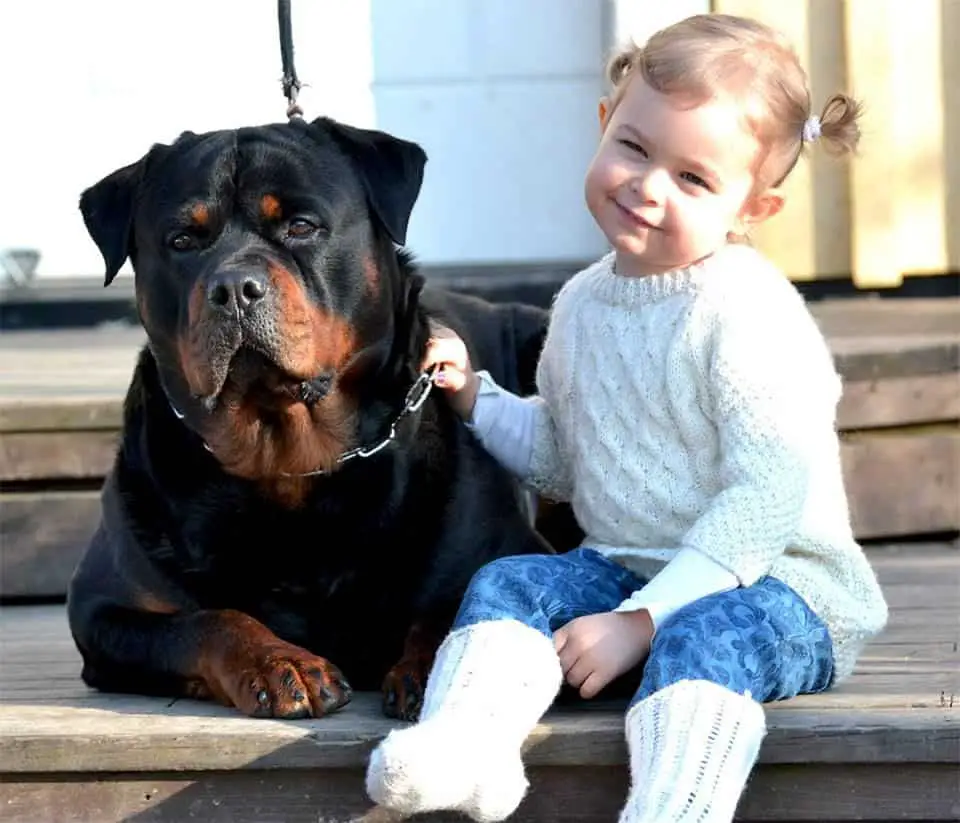
When a Rottweiler pushes past, jumps on or crowds a small child, adults need to intervene and change the setup. It is not the child’s job to establish dominance, make the dog obey or prove they are “above” the dog. Rottweilers and small children need thoughtful supervision and clear physical boundaries.
Even friendly excitement can knock a child over. If there is growling, freezing, snapping or any bite history, keep the dog and child safely separated and seek professional assessment before allowing further contact. Do not use the child in an experiment to see whether the behavior has improved.
Adults manage the interaction
Stay attentive whenever the dog and child share a space. Being somewhere in the house is not the same as watching an interaction. If you need to cook, answer the door or focus on another task, use a secure separation arrangement.
The RSPCA advises never leaving a child alone with a dog, including the family’s own dog. Set up gates and resting areas before you need them, and make sure a child cannot follow the dog into its retreat.
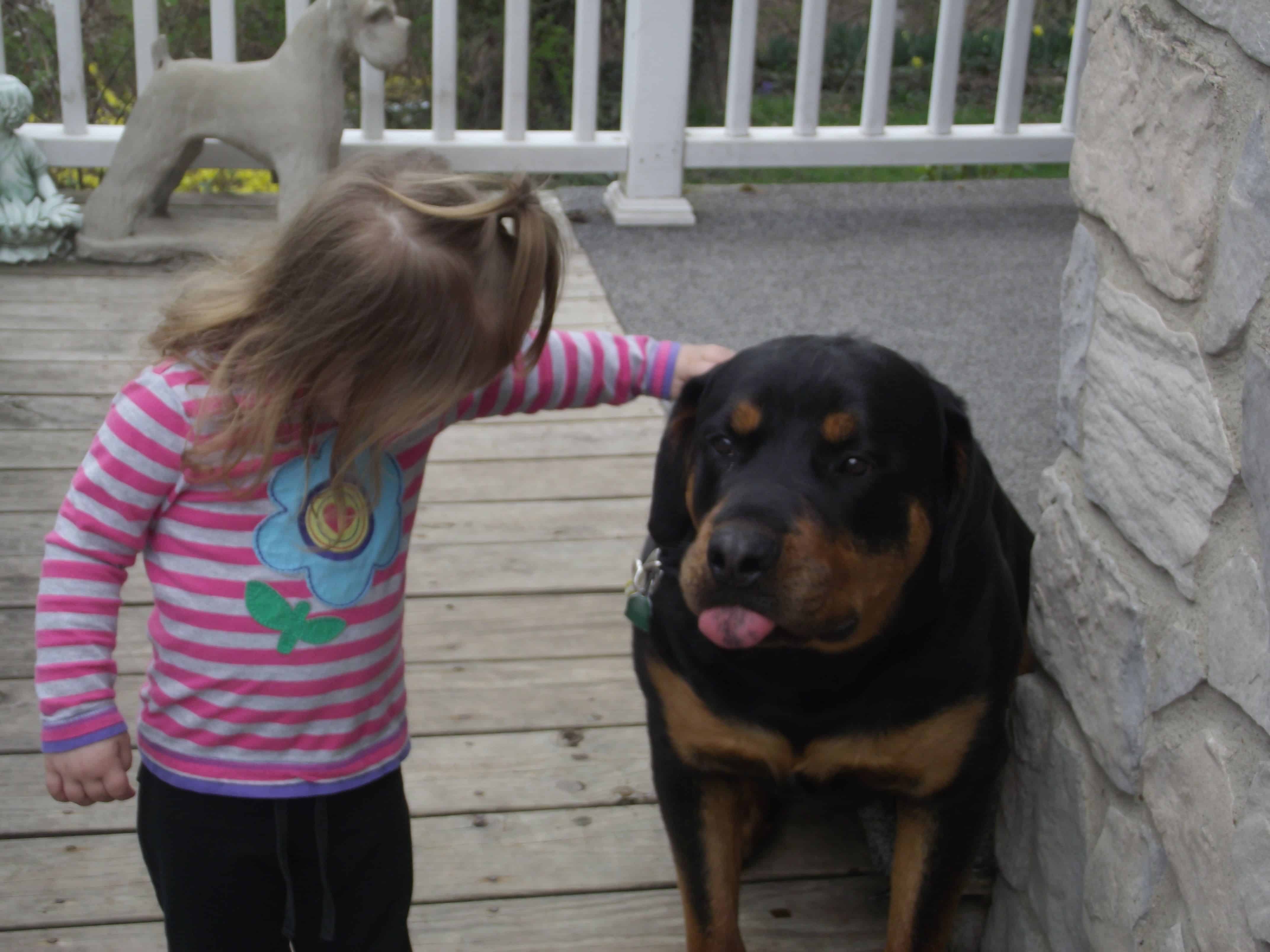
Separate food, toys and rest from child contact
Feed the dog away from the child. Do not ask a small child to deliver meals as a way to earn respect, take away a bowl or retrieve an object from the dog’s mouth. Adults should manage food and valued items without confrontation.
Teach children to leave dogs alone while eating or sleeping and to keep their faces away from the dog’s face. The AVMA’s bite-prevention guidance highlights these everyday situations. A dog that tolerated an interaction yesterday is not a guarantee of safety today.
Teach useful skills without the child present
An adult can practice going to a mat, responding to a recall cue indoors and keeping four paws on the floor. Reward small successes in a quiet setting before expecting those skills around household activity.
Do not push the dog’s body into a sit or require a child to repeat commands until the dog complies. AVSAB recommends reward-based training. The purpose is to teach understandable actions, not to establish a family ranking.
For example, reward your Rottweiler for resting on a mat while an adult moves around the room. Keep the first sessions easy. Later, a qualified professional can help decide whether and how to practice around a child safely.
Prevent rough play before it escalates
Running, squealing and waving toys can make interactions more exciting. Plan separate play spaces so a child does not have to stand still while an adult struggles to regain control. Avoid games in which the dog chases or wrestles with the child.
Provide your dog with suitable exercise, enrichment and undisturbed rest. These support a workable routine, but they do not replace supervision. An overtired child or an excited dog is a good reason to end an interaction early.
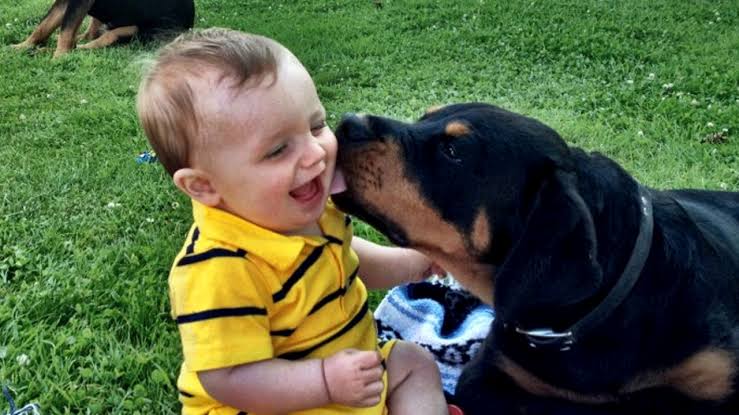
Respond to discomfort, not just a bite
Notice avoidance, stiffening, freezing or attempts to get away. Stop the interaction and give space rather than asking the child to keep petting the dog. Do not punish a growl; it is information that the situation needs to change.
A sudden behavior change also deserves a veterinary check. If you are concerned about aggression, ask your vet for qualified behavior support and maintain separation while arranging help. General obedience tips are not enough to assess the risk to a small child.
Build a household plan everyone understands
Tell visitors and caregivers where the dog rests, how gates work and which interactions are off limits. Do not rely on a child remembering rules when excited. Our Rottweiler family safety guide covers wider household boundaries.
The aim is a calm, manageable environment where the dog can retreat and the child is protected. Adult responsibility remains central, regardless of how well trained or affectionate the Rottweiler appears.