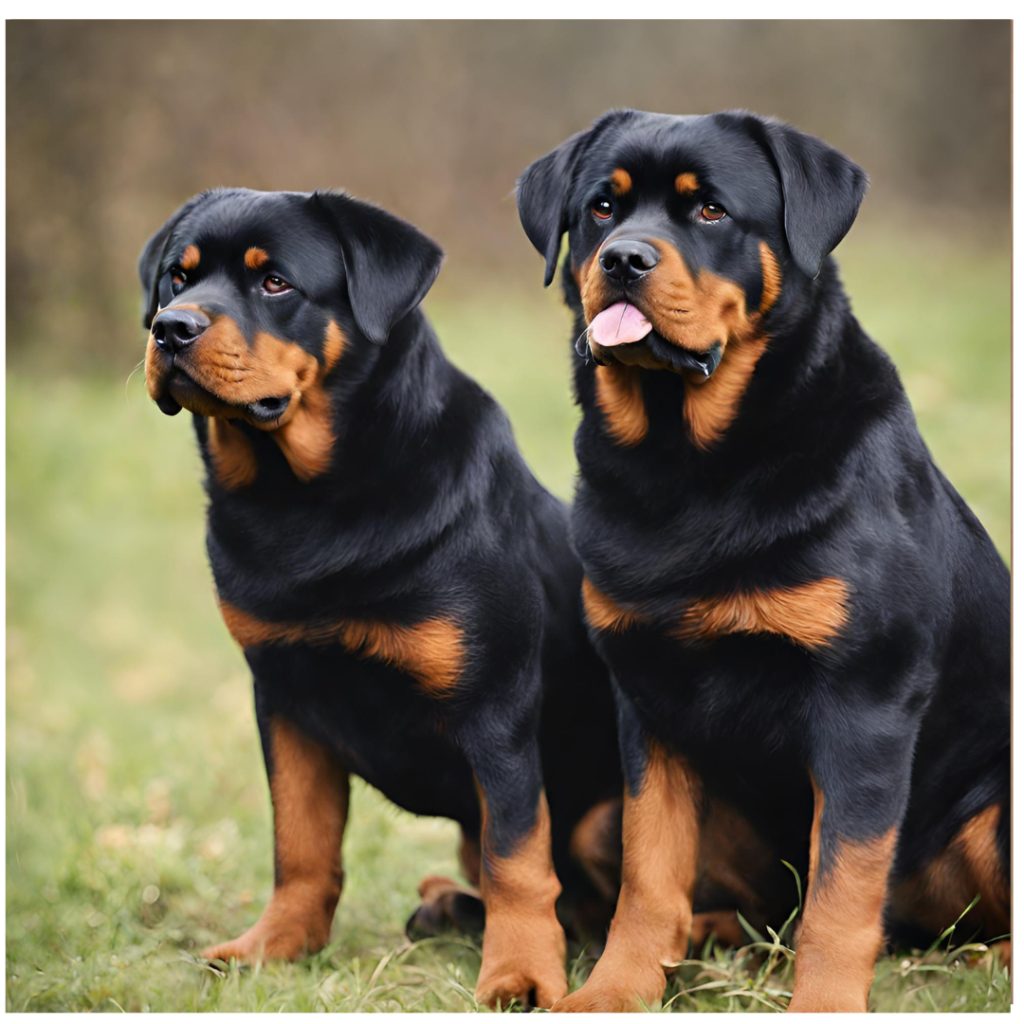
Some Rottweiler facts are useful; others are myths repeated so often that they begin to sound certain. Coat photographs, a familiar rumbling sound and stories about ancient dogs can all lead to assumptions that deserve a closer look.
Here are six claims to read carefully, with the practical point an owner can take from each one.
1. A Similar Appearance Does Not Prove Ancient Ancestry
Traditional breed histories connect Rottweiler ancestors with Roman drover dogs. Resemblance to a mastiff, however, is not proof of a particular pedigree. The Rottweiler study guide hosted by the AKC notes that the origin is not a documented record.
That does not make the history uninteresting. It means separating an account of ancestry from a fully recorded family tree. Our Rottweiler breed-history guide explains the distinction.
2. An Unusual Coat Photo Is Not a Breed Standard

This photo alone does not establish a dog’s ancestry. The FCI Rottweiler standard specifies a black coat with defined tan markings. An unusual color should not be presented as proof of a rare, superior or historically standard Rottweiler.
For anyone choosing a dog, reliable records and health information matter more than a color-based sales claim. Avoid assuming either pedigree or quality from an image circulating online.
3. A Rumble Is Not Automatically a Happy Purr
Owners sometimes describe a Rottweiler’s low vocalization as a rumble or purr. That label is not enough to tell you how the dog feels. Look at the situation and the rest of their body language rather than dismissing a warning sound as a breed quirk.
The AKC’s growling guide explains why context matters. Give a dog space if you are unsure, and seek professional advice about concerning or changing behavior. Do not provoke another growl to test your interpretation.
4. A Short Coat Still Sheds
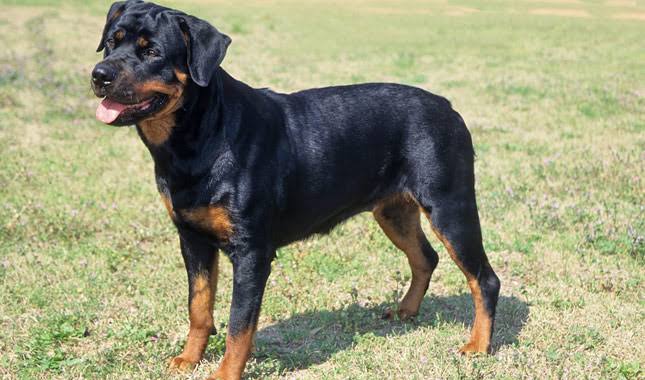
A short coat does not mean there will be no hair around the house. The AKC’s Rottweiler care overview describes moderate shedding with heavier seasonal periods and regular brushing.
You do not need to claim that every Rottweiler will become tangled without daily grooming. Adjust care to your dog’s coat and watch for skin changes, irritation or unusual hair loss that need veterinary attention.
5. Working Ability Is Individual
Rottweilers have performed a range of working roles, but a breed’s achievements do not guarantee that your dog is suited to every sport or specialist job. Health, temperament, training and the requirements of the activity all matter.
Choose activities your dog can enjoy comfortably instead of treating participation as a test of whether they are a “real” Rottweiler. For everyday options, start with our Rottweiler activity ideas.
6. Leaning Does Not Have One Guaranteed Meaning
A dog leaning against you is not, by itself, evidence that they are trying to herd you. What happened just before, whether the dog is relaxed and how they respond when you move are more useful observations than a single ancestry-based explanation.
Likewise, an adult-sized dog still needs patient teaching. Do not expect size to produce instant manners or use “still a puppy inside” as a reason to ignore behavior that needs help.
The useful habit is to ask what you actually know and what you are assuming. Enjoy your Rottweiler’s personality while leaving room for the individual dog—not every appealing story needs to become a fact.