
A female Rottweiler can be a wonderful companion, but choosing one should involve more than the idea that females are automatically gentler or easier. Look at the individual dog, her history, health, and the daily care your household can provide.
This guide focuses on practical questions before bringing a female home. Sex is one part of the picture; it does not guarantee a particular personality, compatibility with children, or suitability for assistance work.
Plan for a Strong Adult Dog
The American Rottweiler Club breed standard gives an adult female height range of 22 to 25 inches at the shoulder. That is a breed-standard range, not a guarantee for every dog. Avoid treating one weight as the correct target for all females.
Think about everyday handling: getting into a vehicle, walking past distractions, and providing care if she becomes unwell. A female may be smaller than a male without being a small or physically easy dog. Plan equipment and support around the individual rather than a label.

Ask About Her Behavior, Not Stereotypes
“She is female, so she will be calm” is not enough information. Ask how she responds to unfamiliar people, handling, time alone, and other animals. Find out what settings those observations come from. A relaxed meeting in one place does not predict every situation after adoption.
For an adult dog, ask the rescue or previous caregiver about known behavior concerns and successful routines. For a puppy, discuss the breeder’s socialization approach and the parents’ health and temperament. Be cautious of promises that any dog will naturally protect children or never show aggression.
Prepare the Household Before Arrival
Set up a comfortable resting area, suitable barriers, and a manageable routine. Agree who handles walks, feeding, training, and veterinary appointments. Children need adult supervision around any dog; choosing a female does not remove that responsibility.
If there are resident pets, arrange introductions carefully and ask for advice suited to the animals involved. Do not assume matching or different sexes guarantees friendship. Give each animal room to retreat and separate resources while you learn how they respond.
Our guide to bringing home a rescue Rottweiler covers planning a calm transition.
Discuss Reproductive Care With Your Veterinarian
If she is not spayed, ask about heat cycles, preventing accidental mating, and an appropriate veterinary plan. Timing varies between dogs, so do not rely on a calendar estimate alone to decide when contact with intact males is safe.
Cornell’s guide to canine heat cycles explains reproductive changes and spaying. Discuss the benefits, risks, and timing of surgery for your individual dog. This is a veterinary decision, not a reason to breed a dog casually or follow a one-age-fits-all rule.
Teach Everyday Skills Consistently
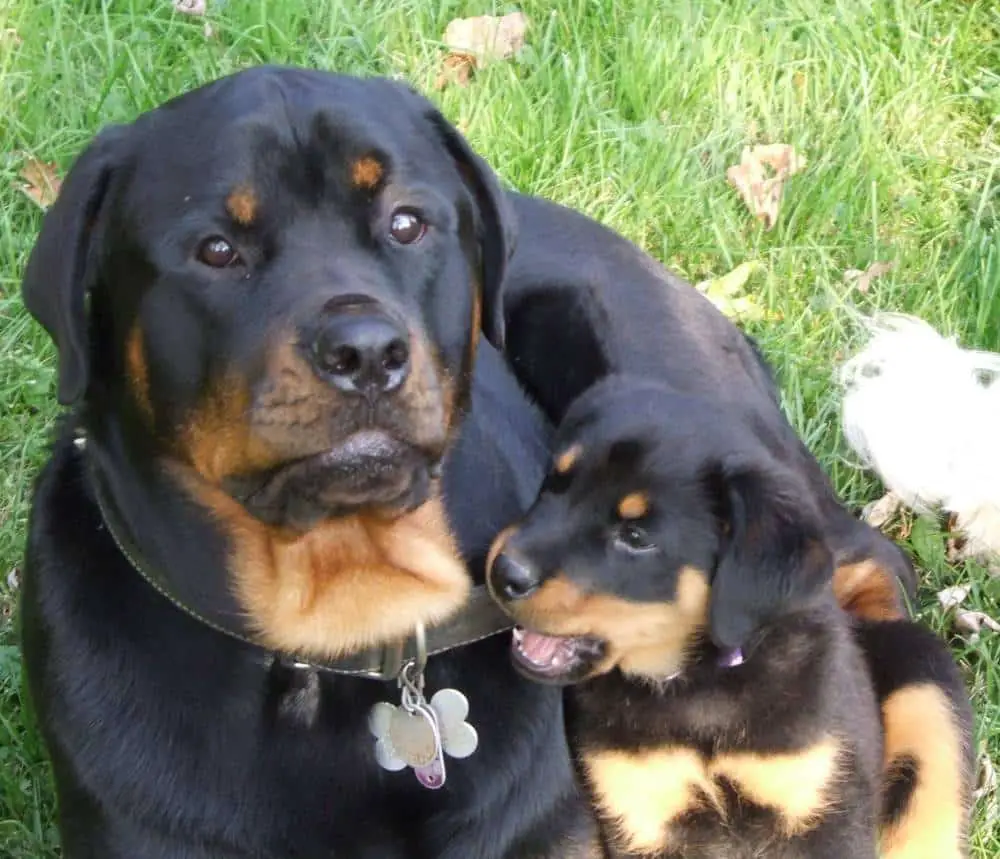
Start with useful household skills: responding to her name, settling on a bed, walking comfortably on a leash, and cooperating with gentle handling. Keep practice manageable and reward progress. Female dogs still need clear teaching and appropriate outlets for activity.
Do not expect maternal instincts to prepare a dog for therapy visits or assistance tasks. Those roles require suitable temperament, specialist preparation, and assessment. Ordinary pet training should not include improvised instructions to grab a person during a medical event.
For help simplifying a difficult training task, see our Rottweiler training reset guide.
Choose a Match You Can Support Long Term
Before committing, budget for food, preventive care, training help, and unexpected veterinary needs. Ask what support the breeder or rescue offers if difficulties arise. An honest discussion of limitations is more useful than reassurance based only on sex.
The right female Rottweiler is not the one who fits a stereotype. She is the dog whose needs you understand and can meet, with a realistic plan for the years ahead.