We know what Rottweilers look like, and if you are on this site, you most likely proudly own a Rottweiler puppy or are looking to learn more about this beautiful breed, but what`s behind rottweiler history and how was this beautiful creature morphed throughout history?
By looking at a Rottweilers past, we are better able to understand him, the roles he played, we can also see why he acts in certain ways, why his body looks the way it is why rottweiler training is important and what made him the creature we look at today. While the Rottweilers past is a bit blurred and not entirely documented, there is belief things may have gone this way.
History Facts Your Rottweiler Wants You to Know
The Origin of My Name
My name is Rottweiler, you may already know this, but it’s wort mentioning that I am called this way because I was frequently found working in “Rottweil” a charming town located in southwest Germany, somewhere between the Black Forest and the Swabian Alps. The name of this town derives from the German words “Rote Wil,” meaning red tile. Indeed, if you are lucky to visit this town you’ll see many homes adorned with red tiles, but best of all, you’ll see a beautiful Rottweiler statue erected in my honor. I think all Rottweiler lovers should visit this town one day and take a picture besides this statue!
A Butcher’s Best Friend
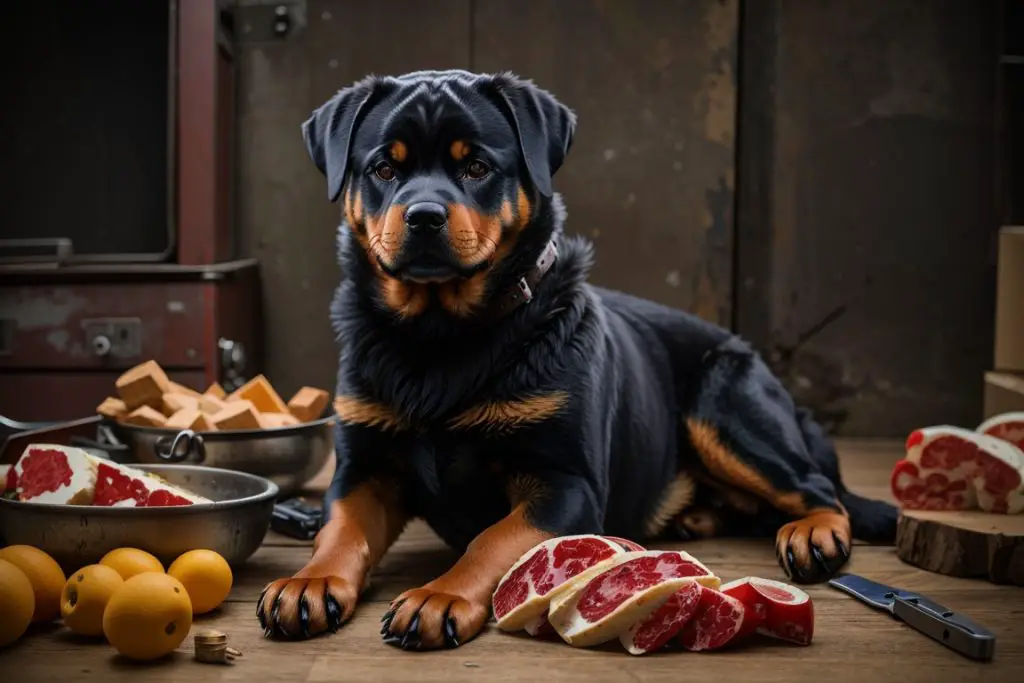
What kind of work was I doing in the red-roofed town of Rottweil ? I was herding cattle to the market and was also a butcher dog; indeed, I was often known as “Rottweil’s butcher dog.” I was pulling carts loaded with goods and slaughtered meat at the market and the butcher used to tie pouches filled with his hard-earned money around my neck. The money was sure safe this way! But being a butcher dog wasn’t really my original occupation. Long before that, I was actually working with cattle.
A Rottweiler Role in History
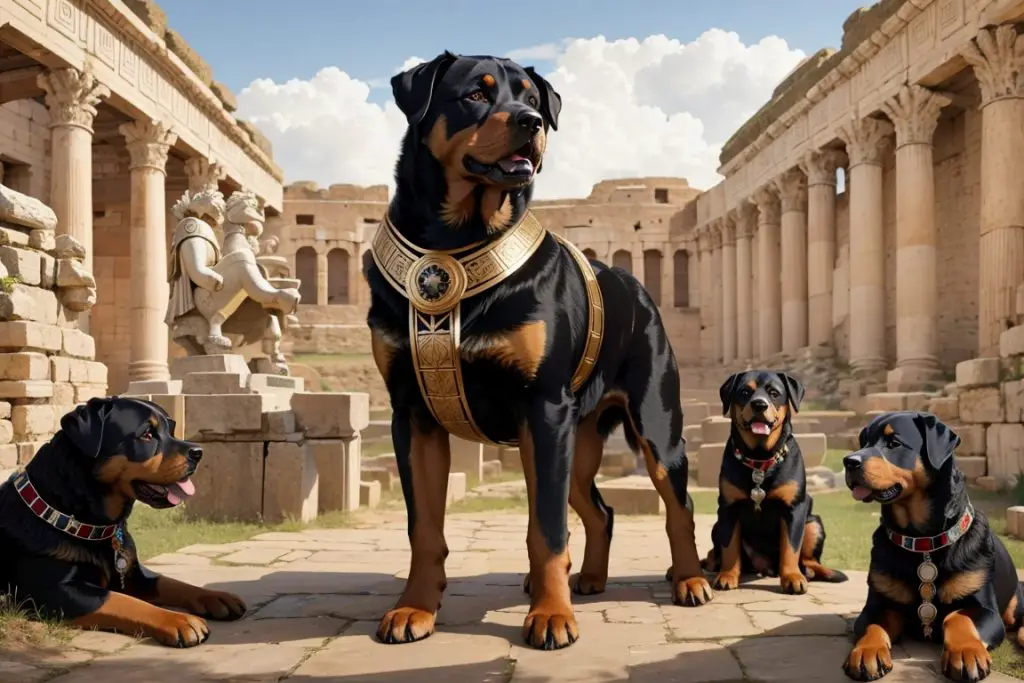
My history likely dates back to the Roman Empire. As a descendant of the ancient Roman drover dogs, I was selectively bred to be a tough cookie, a rugged dog capable of working different kinds of livestock in a variety of conditions. I was known for my versatility, intelligence and guarding instincts. And guess what? I even played a role in history marching with the Romans in their quest to conquer Europe. I accompanied troops who depended on herds of cattle for food since back then there was no means for refrigeration. My job was to keep the herd the cattle together and guard them at night. We traveled across the the Alps, all the way into southern Germany where I continued herding for the next two centuries even after the Romans were gone as they were driven out by the Swabians.
An Unemployed Worker
I was born to be a working dog, that’s why I am always looking for something to do. Unfortunately, as the years went by, Europe became quite industrialized and the railroads became the main way livestock were moved to the market. To make things worse, a law was passed banning cattle from being driven over roads, so the need for my herding abilities declined. Sadly, I remained unemployed for some time and our numbers declined dramatically. Just think that by 1882, only one Rottweiler showed up at a dog show in Heilbronn, and not only, that Rottweiler was a poor representative of my breed!
Versatility Was My Second Name
Luckily for me, during World War I there was a great demand for police dogs in Germany, so our numbers were on the rise and people were interested in me again. This time though, I was employed for multiple tasks. I am a very versatile dog, you know? I was utilized as a messenger, guardian, draught and ambulance dog. In 1907, the first Rottweiler club was founded in Germany, and in 1924, 2,400 Rottweilers were registered! But our biggest rise in popularity occurred in the mid 1990’s, when over 100,000 of us were registered with the American Kennel Club. Yet, being popular isn’t always good. Irresponsible breeders and puppy mills started breeding with money as their best interest and our over all quality went considerably down. Luckily, reputable and dedicated breeders intervened to turn things around and transform us in the wonderful dogs you see today.
The Modern Rottweiler
As seen, I sure have gone through a lot! My broad chest, muscled body, strength and stamina are a reflection of my past heritage. If you see me get restless when you don’t exercise me enough and provide enough mental stimulation it’s because I was born to be a working dog. I am still versatile, you can use me as a service dog, personal protection dog, therapy dog, you name it! And at the end of the day, when you look into my eyes, you’ll still see my intelligent, alert and fearless expression that made me the dog I was meant to be.