
Rottweiler reactivity on walks can make an ordinary outing stressful. A dog that is relaxed at home may bark, lunge or freeze when another dog, a cyclist or a stranger appears. Take that behavior seriously, but do not assume your Rottweiler is naturally aggressive or simply refusing to obey.
The first priorities are preventing injury and understanding the pattern. A short article cannot assess bite risk or prescribe an individual behavior plan. If you cannot safely control your dog, avoid busy routes and arrange professional help before setting up training encounters.
Make the next outing safer
Choose a quieter place and time with room to change direction. Check that your dog’s equipment fits securely and that the handler can manage them. Do not allow children to handle a dog that lunges, and avoid greetings with strangers or unfamiliar dogs for now.
If a trigger appears unexpectedly, increase distance calmly instead of insisting your dog sit close to it. A parked car or another visual barrier may help you leave the situation, provided you remain clear of traffic. You are not failing by turning around.
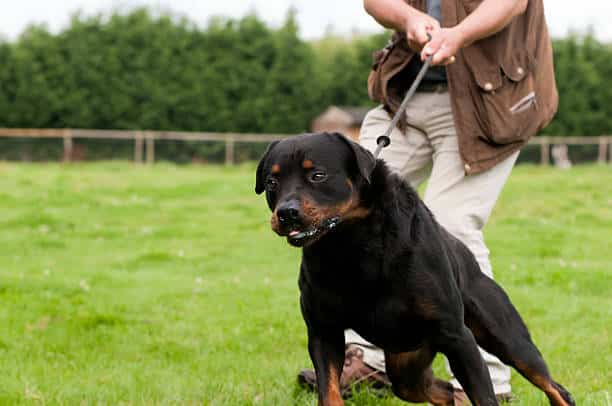
Arrange a veterinary assessment
Tell your vet when the behavior began and whether it is changing. Mention stiffness, sensitivity to touch, changes in hearing or vision, appetite changes and anything else unusual. Pain or illness can affect behavior; a diagnosis cannot be made from barking alone.
Bring a written account of the incidents. Do not recreate a dangerous situation to obtain a video. Your vet can help decide what medical investigation and behavior referral are appropriate.
Describe triggers without guessing motives
Record what your dog reacts to, how far away it is and how quickly they recover after it passes. A dog approaching directly may produce a different response from one walking away across the road. Repeated encounters during one walk can also make it harder to settle.
Use descriptions such as “barked when the cyclist passed close by” rather than “hates cyclists.” Those details give a professional something concrete to work with. For people-specific reactions, see our guide to barking at some people but not others.
Keep training below the point of escalation
A professional may use gradual exposure and positive associations at a distance your dog can handle. The VCA safety and management guidance emphasizes preparation before exposure to situations that provoke aggression.
Do not lure your dog closer to a trigger with food or wait for a full outburst before changing the setup. If they are overwhelmed, leave and make the next attempt easier. The aim is comfortable coping, not merely suppressing noise.

Avoid corrections that add fear or pain
Shouting, leash jerks and intimidating confrontations can make a difficult encounter worse. AVSAB recommends reward-based methods, including for behavior problems. Ask a prospective trainer exactly how they respond when a dog reacts.
If bite risk is present, discuss appropriately fitted muzzle training with your professional. A muzzle is an additional safety measure, not permission to push the dog into close contact or leave them unattended. Introduce equipment positively rather than first using it during a crisis.
Measure progress realistically
Look for shorter recovery, easier route changes and comfortable observation from a safe distance. There is no guaranteed number of days until a reactive dog is “fixed.” Keep records and adjust the plan with your professional if incidents continue.
At home, provide suitable activity, enrichment and rest without trying to exhaust your dog. Secure management protects others while the underlying issue is addressed. A quieter, shorter walk that your Rottweiler can manage is often a better starting point than another overwhelming outing.