
Rottweiler puppy socialization is about helping your puppy feel comfortable with everyday life, not turning every outing into a greeting. A dog who can calmly watch people or other dogs from a distance is learning a useful skill, even without approaching them.
Plan small, positive experiences and pay attention to your puppy’s response. The aim is confidence and flexibility—not a dog who must enjoy every person, place, or animal.
Start Early With Appropriate Precautions
The early months matter, but socialization does not mean separating a three-week-old puppy from their mother or exposing them indiscriminately to outdoor risks. Before bringing a puppy home, ask what safe experiences the breeder or rescue has already provided.
The American Veterinary Society of Animal Behavior supports appropriate socialization before puppies are fully vaccinated. Discuss your puppy’s health, vaccination history, and local disease risks with your veterinarian. Choose controlled settings rather than areas heavily used by unfamiliar dogs.
Make Experiences Small Enough to Enjoy
Introduce a household sound at a manageable level, let your puppy explore a safe new surface, or watch a quiet street from a comfortable distance. Pair the experience with something pleasant and allow breaks. You do not need to fill every day with unfamiliar places.
If your puppy tries to retreat, freezes, or becomes increasingly unsettled, give them more space or end the session. Do not pull them toward a person or keep them in a situation until they stop reacting. Quietness alone does not prove they are comfortable.
Teach People How to Help
Ask visitors to avoid crowding, reaching over the puppy, or insisting on contact. Let the puppy choose whether to approach. Calm observation can be the entire exercise, especially at first.
Children need close adult supervision and clear boundaries. They should not chase, hug, or pick up a reluctant puppy. Keep introductions short and provide a resting space where the puppy is left alone. Our Rottweiler family safety guide explains why supervision remains important beyond puppyhood.
Choose Dog Interactions Carefully
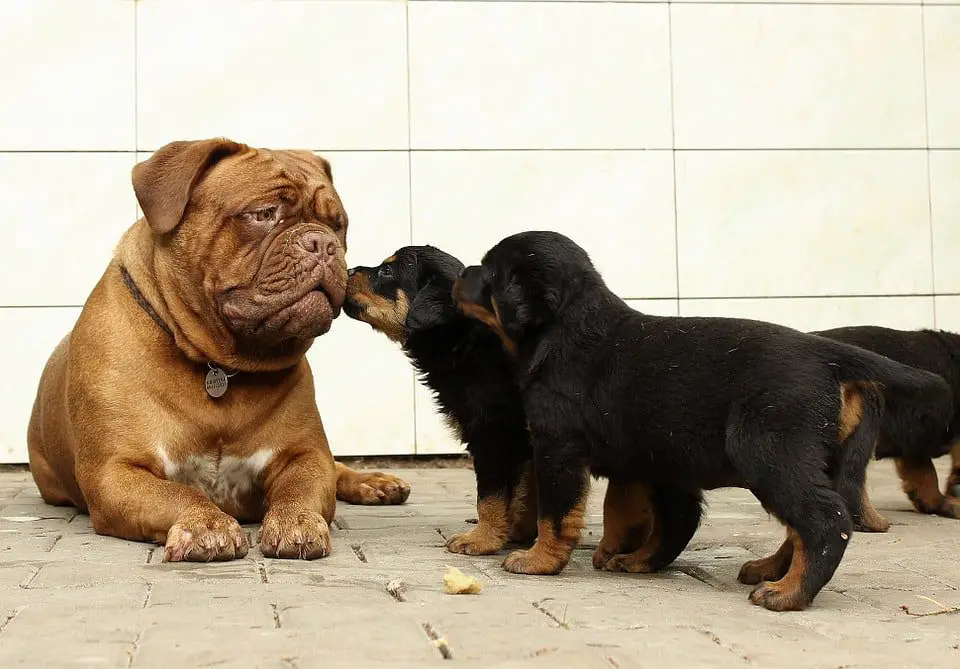
Not every dog is a suitable playmate. Ask about health and behavior, use an appropriate setting, and watch both animals. Avoid assuming that a larger group offers better socialization.
If one dog keeps avoiding the other, becomes tense, or cannot take a break, end the interaction calmly and create space. Do not simply send them back to play after a worrying exchange. Repeated frightening encounters are not a necessary lesson in being sociable.
Look for a Well-Managed Puppy Class
Ask the instructor about health requirements, cleaning, class size, and how they handle shy or overexcited puppies. Reward-based teaching, breaks, and carefully managed interactions matter more than unstructured playtime.
A useful class also teaches owners how to read their puppy and practice skills at home. Avoid programs that force greetings or use physical corrections. Bring concerns to the instructor early rather than waiting for your puppy to become overwhelmed.
Keep Building Confidence at Your Puppy’s Pace
Repeat comfortable experiences and add difficulty gradually. A short note about what went well can help you plan the next outing. There is no need to judge progress by the number of strangers your puppy meets.
If fear is persistent or behavior feels unsafe, ask your veterinarian for help and a referral to a qualified reward-based professional. For day-to-day structure, see your Rottweiler puppy’s first-week routine. Socialization works best as part of thoughtful care, with enough rest and no pressure to perform.
Featured image credit: James Thompson.