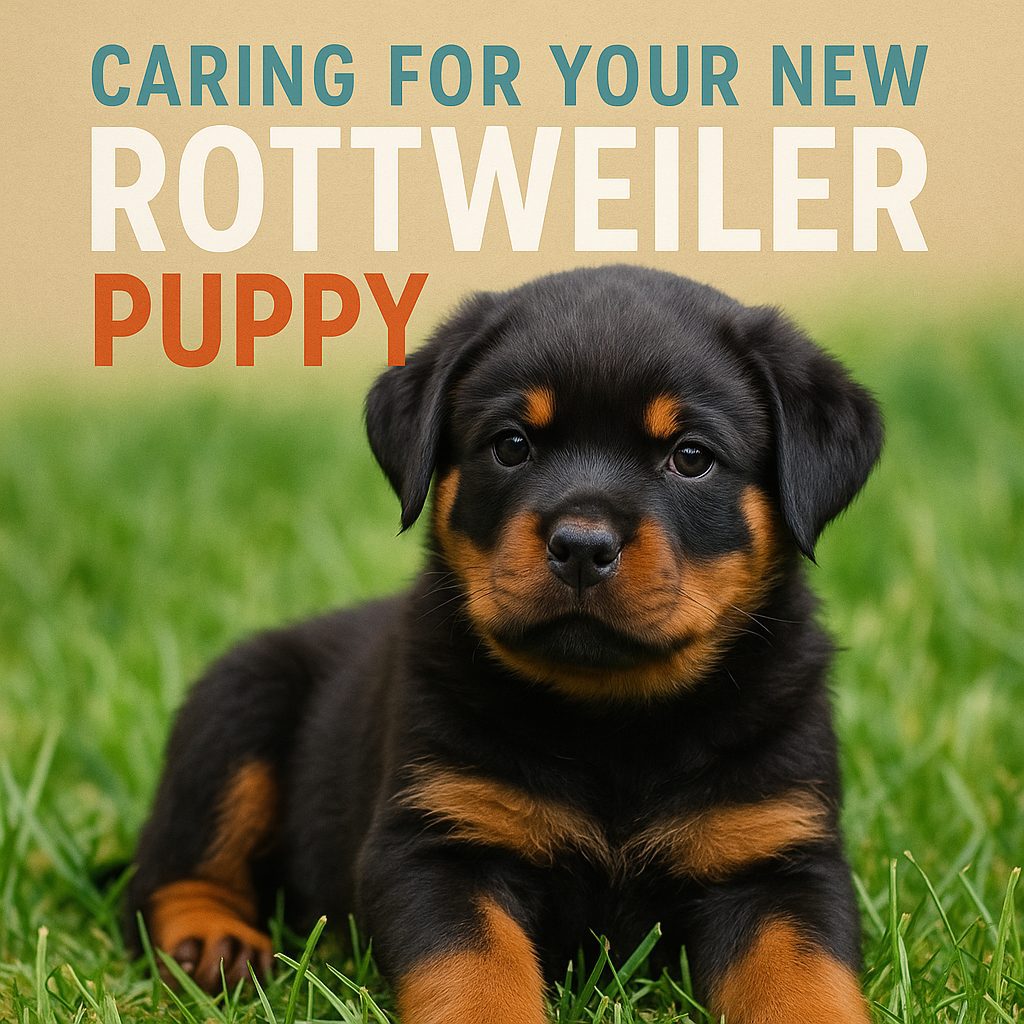
Caring for your new Rottweiler puppy starts with a few dependable basics: a safe place to rest, suitable food, regular toilet opportunities, and a veterinary plan. You do not have to teach everything in the first week. Give your puppy time to settle while you learn their normal appetite, activity, and behavior.
Use this guide to organize the first days at home. Keep individual feeding and medical decisions with your veterinarian, and adjust the routine as your puppy grows.
Before the Journey Home
Ask the breeder or rescue for the food name, current feeding amounts, vaccination and parasite-treatment records, and any known health concerns. Find out what daily routine the puppy already knows. Clear written information is more useful than trying to remember everything during collection.
Prepare a safe travel arrangement and a quiet arrival. At home, remove accessible cables, medicines, cleaners, and objects small enough to swallow. Set up a comfortable bed or appropriately introduced crate in a supervised area. Barriers can help you manage the space without expecting a puppy to understand every household boundary.
Book the First Veterinary Visit
Arrange an early appointment and bring the records. Ask your veterinarian to review growth, body condition, vaccinations, parasite prevention, and the safest local options for outings. Do not assume that a puppy has complete protection because they have already received one vaccination.
Keep the clinic and emergency clinic contact details easy to find. Seek prompt veterinary advice for illness, repeated vomiting or diarrhea, unusual lethargy, or refusal to eat; urgent signs such as collapse or difficulty breathing need emergency care. A young puppy can become unwell quickly, so do not wait for an internet diagnosis.
Keep Feeding Simple and Measured
Use a complete and balanced food suitable for large-breed growth. The FDA explains how nutritional adequacy statements identify a food’s intended life stage. Check the statement rather than relying only on attractive ingredients or the word “natural.”
Ask about the current diet before making changes, and discuss a gradual transition if one is needed. Measure portions, divide the daily amount into suitable meals, and review growth and body condition with your veterinarian. Food energy density varies, so a generic cups-per-age chart is not an individual feeding prescription.
Do not add calcium or other supplements to a complete diet unless your veterinarian recommends them. Corn and soy are not automatically nutritionally worthless, and an ingredient list alone cannot tell you whether a diet is appropriate. Our puppy-food selection guide and puppy diet mistakes guide explain the next questions to ask.
Create a Predictable Toilet and Rest Routine
Offer frequent toilet opportunities, especially after waking, eating, and play. Stay nearby and reward toileting in the chosen place. If there is an accident, clean it calmly and adjust supervision; punishment after the event does not show the puppy where to go.
Allow plenty of undisturbed rest between activities. A puppy who becomes increasingly mouthy or frantic may need a quieter setting, not another exciting game. Keep the resting area comfortable and help the puppy settle without using isolation as punishment.
Do not expect an unfamiliar crate to work immediately for long absences. Introduce it gradually with positive experiences and arrange care that fits the puppy’s needs. If confinement causes distress, seek guidance rather than repeatedly leaving the puppy to panic.
Teach a Few Useful Skills
Begin with responding to their name, following you a short distance, and settling briefly on a mat. Reward small successes and keep sessions short. Everyone in the home should use consistent cues and avoid rough play that encourages grabbing hands or clothing.
Handle paws and other areas gently in small steps, pairing comfortable cooperation with rewards. Do not force a long grooming session. If the puppy seems painful or unusually worried, pause and ask for advice. For help breaking skills into easier steps, see our practical training reset.
Socialize Without Overwhelming Your Puppy
Socialization means building comfortable experiences, not meeting as many dogs or people as possible. Let the puppy observe at a distance and retreat when needed. A crowded dog park is not a necessary introduction to the world.
AVSAB supports appropriate early puppy socialization, including before the vaccination series is complete, with suitable precautions. Ask your veterinarian about local infection risks and a well-managed puppy class. You can also introduce household sounds, surfaces, and calm visitors in controlled ways.
Do not encourage protective displays or make a frightened puppy endure a greeting. Confidence develops through manageable experiences, not pressure.
Review What Is Working
At the end of each day, note meals, toilet patterns, rest, and anything that concerned you. This can reveal when the routine needs changing and provides useful information for your veterinarian or trainer.
Your aim in the first week is not a perfectly trained dog. It is a puppy whose basic needs are met and a household with a clear, kind routine. Build from there, one useful habit at a time.