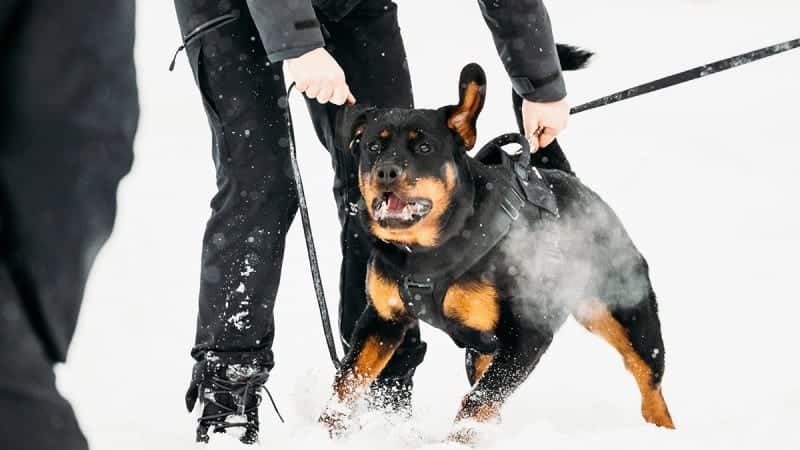
A Rottweiler harness can be a useful walking tool, particularly when you want the lead attached around the body rather than the neck. Its usefulness depends on the design, fit and how you use it. No harness provides total protection, guarantees control or replaces training.
Start by thinking about the problem you want to solve. A dog who pulls toward smells needs practice as well as equipment. A dog who coughs, struggles to breathe or appears painful needs veterinary advice—not just a different harness.
What a Harness Can Help With
A suitable harness offers a body attachment point and may make walks more manageable. For some dogs, avoiding lead pressure directly on the neck is useful. The AKC’s collar and harness comparison explains practical differences between these options.
That does not mean a harness is harmless in every situation. Poor fit can rub, shift or allow a dog to escape. Rough handling can still be uncomfortable, and damaged equipment can fail. Check both the dog and the equipment rather than relying on a product label.
Choose the Attachment for the Task
Front attachments can help some handlers manage pulling while teaching loose-lead walking. Back attachments can suit other dogs and activities. A dual-attachment design offers options, but more clips do not automatically mean a better fit.
Watch how the harness sits when the lead is attached. It should not twist markedly, interfere with the legs or make normal movement awkward. Ask a qualified trainer to help if you cannot handle your dog comfortably; do not keep increasing force through the lead.
Check Fit on Your Dog
Measure as the manufacturer directs and use that product’s size chart. A breed name or weight range alone is not enough. Try the harness with the dog standing and moving, and check straps, buckles and the area behind the front legs.
Follow the fitting instructions and check for slipping as well as tightness. The AKC’s harness-fit guidance highlights discomfort and escape risks from an unsuitable fit. Reassess fit as a puppy grows or an adult’s body condition changes.
Inspect stitching and attachment points regularly. Replace worn or damaged equipment rather than assuming it will withstand one more strong pull.
Introduce It Without a Struggle
Let your dog investigate the harness and reward calm interest. Practice the steps of putting it on gradually. If your dog backs away or becomes uncomfortable, slow down and check whether the design or handling is the problem.
Begin with a short, easy outing rather than a crowded route. Watch for rubbing, unusual movement or attempts to remove it. Do not leave the harness on unattended where it could catch on something.
Keep Teaching Loose-Lead Walking
Reward your dog for staying near you on a relaxed lead. Practice in quiet surroundings before expecting the same skill beside other dogs or traffic. Change direction or create space early rather than waiting until your dog is pulling at full strength.
Our home-training guide explains short reward-based lessons. Equipment helps manage a situation; it does not explain the behavior you want by itself.
Separate Walking Gear From Travel Safety
A walking harness is not automatically a crash-tested vehicle restraint. For car travel, choose an appropriate transport setup and follow its instructions. Our road-trip safety guide covers those separate checks.
The best result is a dog moving comfortably and a handler able to manage the walk safely. Choose fit and function over promises that one harness will solve every pulling or behavior problem.