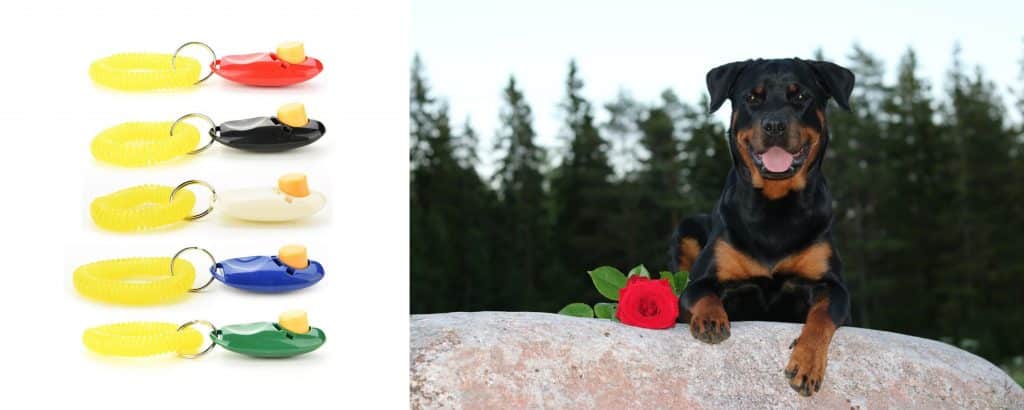
Your Rottweiler’s first clicker session should be simple enough that both of you can relax. You are not testing obedience or trying to teach five commands. You are introducing a useful signal: that sound means a reward is coming.
A clicker is a marker, not a remote control. It does not tell your dog which action to perform, and it should not be used to startle them out of unwanted behavior. Once the meaning is clear, it can help you identify a precise moment during training.
Get ready before bringing your dog over
Choose a quiet, familiar space with a comfortable floor. Put small, suitable rewards within easy reach and remove distractions such as another pet competing for food. Keep the amount within your dog’s normal feeding plan.
Practice handling the clicker and reaching for a reward without your dog first. If the equipment feels awkward, a short marker word such as “yes” is an alternative. The useful part is clear timing, not owning a particular gadget.
Introduce the sound gently
Keep the clicker away from your dog’s ears. Click once, then promptly give a reward. Pause and repeat a few times while your dog remains comfortable. You do not need to request a sit at this stage.
The AKC’s marker-training guide explains this initial click-then-reward association. Do not click repeatedly and then deliver one treat after a long delay. If your Rottweiler is startled by the sound, stop and use a gentler marker rather than insisting that they tolerate it.
Choose one easy behavior
For an initial exercise, you might mark a brief glance toward you in that quiet room. Click at the moment your dog looks, then reward. Let them look away and have another opportunity; there is no need to demand sustained staring.
Alternatively, practice with an action your dog already knows. Keep your expectations small so you can concentrate on timing. Our guide to capturing, luring and shaping explains how to develop behaviors after these first introductions.
Keep the marker and the cue separate
A cue asks for a familiar behavior; the click identifies the moment you want to reward. Clicking first to get your dog’s attention can blur that distinction. Watch for the action, mark it, then deliver the reward.
If you click a little late, still follow through with the reward and make the next attempt easier to time. Consistent reward delivery matters. Do not withhold the promised reward because your dog moved after the click.
Stop before either of you gets frustrated
A short, comfortable practice is more useful than repeating an exercise until your dog loses interest. If your Rottweiler turns away, becomes frantic about the food or cannot concentrate, pause. Consider whether the environment or task needs to be easier.
You do not need to force one final successful repetition. Put the equipment away calmly and try later. Make a quick note of what was easy and what felt awkward so the next practice has a clear starting point.
Build gradually after the first session
Repeat familiar exercises before introducing harder surroundings. Change one challenge at a time, such as practicing in another quiet room rather than jumping straight to a busy park. Keep rewards ready and avoid raising your voice when your dog needs help.
A clicker can support learning, but it is not treatment for fear, guarding or distress on its own. Get qualified reward-based help for those concerns. For everyday manners, progress comes from clear, achievable steps that your Rottweiler can understand.