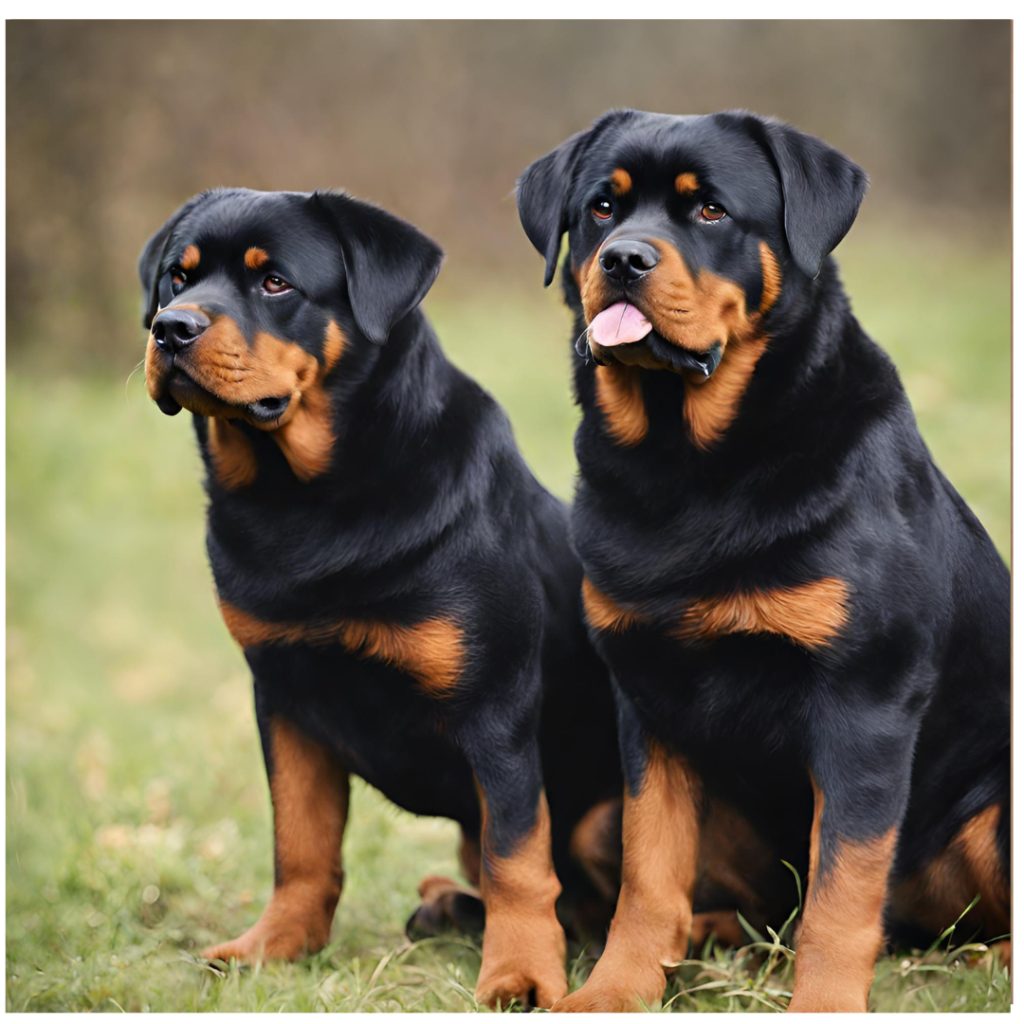
Rottweiler breed history is closely tied to working dogs, cattle trading and the German town of Rottweil. The familiar black-and-tan dog has a much richer background than the simple description “guard dog” suggests.
It is also a history that needs careful wording. Ancient ancestry and a modern, formally defined breed are not the same thing. Understanding that distinction helps separate a useful account from a collection of impressive-sounding claims.
Ancient Roots Are Not a Complete Pedigree
Breed histories commonly connect Rottweiler ancestors with the drover dogs that accompanied Roman movements through Europe. However, the Rottweiler study guide hosted by the AKC explicitly notes that the origin is not a documented record.
It is therefore more accurate to discuss traditional accounts of ancestry than to claim that today’s Rottweiler existed unchanged in ancient Rome. A long association with working dogs does not establish an unbroken, individually recorded family tree.
Why the Breed Is Named After Rottweil
The name points to Rottweil, Germany, where dogs helped butchers and cattle dealers with their work. The term Rottweiler Metzgerhund refers to the butcher’s dog of Rottweil.
These were practical working roles, including moving cattle and guarding. The AKC’s historical overview traces that association and the breed’s later development.
This background is worth remembering when reading descriptions focused only on appearance. The story is about dogs working alongside people, not simply being large or intimidating.
From Local Working Dog to Recognized Breed
Modern recognition is a separate chapter from ancient ancestry. The AKC recognized the Rottweiler in 1931 and includes it in the Working Group. That date refers to American registry recognition, not the moment the dogs first existed.
The FCI Rottweiler standard describes a strong working dog with a black coat and defined tan markings. A breed standard sets out an ideal; it is not a promise that every individual will have identical abilities or behavior.
Likewise, a dramatic size claim should not be treated as evidence of quality. Health, sound movement and a suitable temperament deserve more attention than claims that a particular dog is the biggest or toughest.
Working Heritage Does Not Guarantee a Particular Personality
Rottweilers can be devoted companions, but labels such as loyal, protective or intelligent do not replace knowing the individual dog. No historical role guarantees that a puppy will become a service dog, a confident traveler or a safe playmate for another pet.
For someone considering the breed, the practical question is what care and guidance this dog needs today. A household should plan for training, suitable activity, supervision and veterinary care rather than relying on a reputation.
Our Rottweiler owner checklist covers those decisions in more detail. It is a better starting point for choosing a companion than treating historical working ability as an automatic match for your home.
Read Historical Claims With a Little Care
When a story gives an exact ancient date, a remarkable feat or a sweeping statement about all Rottweilers, ask what supports it. A repeated anecdote is not necessarily a documented event.
Keep three questions separate: where the breed’s ancestors may have come from, how the named breed developed, and what a particular dog is like. Mixing them together is how history turns into a sales pitch.
For more examples of the breed’s background and working roles, see our Rottweiler facts guide. The most useful lesson from that heritage is respect for the dog in front of you—not an expectation that they must live up to a legend.