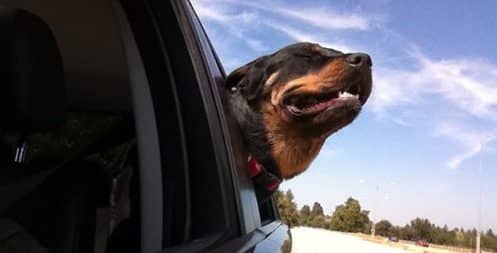
Is it hard for you to manage your Rottweiler car trips?
Maybe it’s the first time your Rottweiler has come on holiday, or maybe you are moving home and your Rotty has to do his longest trip ever?
Preparation is very important if you’re planning on having a pleasant road trip. This may take a bit of effort on your part, but it will be worth it. Read on and learn about traveling with your dog.
Safe Transport
Safety is the most important when you’re driving with your pup. It is actually illegal in certain places to have a dog roaming around in a car while you’re driving. Your dog should be safe in the car to ensure secure travel for him and everyone else on the road.
Crating
The safest way to transport your Rottweiler is crating. You have to get a large crate enough for your Rottweiler to stand up, turn around and sit or lay. This will make him feel free and comfortable, not trapped or prisoned. Be sure to take off anything that could hurt your dog during the trip. Also, provide them with a soft blanket or a cushion to sleep on. Besides, make the mood so positive while carting them.
Make sure to take your Rottweiler for a have a walk around town before taking a long journey. This way you’ll get an idea of his traveling ability and also help him to relax in during the trip. Take care of signs of stress and anxiety as you enter the car with your dog, and don’t forget about car sickness too.
Seat Belt
There is additionally the alternative to have a dog safety belt. It very well may be bought from your nearby pet store and can be effectively introduced in the back seat arrangement of your car. It is an extraordinary danger to let the pooch ride with you in front. In the event that there is a car accident, your pooch might be genuinely harmed or killed. They have to consistently be in the back seat.
Keep the back window open so they get some fresh air. It isn’t safe to enable them to remark from the window. They are in danger of eye damage, and your pup may amaze you also and attempt to leap out of the window in case you’re not cautious.
Car Barrier
The dog car barrier is another great option. This is a barrier that simply goes in the back of your car to stop your dog from jumping over the seats. This works for just about all cars. It’s great if you have an SUV. You can place the barrier so your dog is in the back of the vehicle and your family can relax in the seats without the dog jumping in their laps.
Driving With Your Dog
It’s important to be aware of safety while driving with your Rottweiler. So, don’t stop suddenly and be quiet on U-turns in order to avoid scaring your dog.
Try to avoid feeding your dog before the trip. It’s better to fast your dog before the trip as they may panic from the car sickness because they don’t understand it.
Make sure you stop enough time for rest. Your Rottie might need to go to the toilet more often as it’s one sign of the anxiety they may have from the car ride.
They will be full of energy, make sure they have a small walk in the break. You also can play fetch for a few minutes.
You have to take a blanket and his favorite toy on the road trip, so he can stay calm and distracted.
You also have to make sure your dog is hydrated. Therefore, you may get him a spill-proof water bowl and give him a small amount of water every time and refill it when he finishes it.
It’s a fact that your dog may die in a hot closed car that has no air in less than 15 minutes. Please don’t risk it and leave him on his own.
If you’re traveling with your family, please make sure to warn your children not to trigger your pup during the trip. It will be so stressful and painful for him.
You have to make it as calm as possible. Avoid loud music. This may cause your Rottie to be more anxious. Keep your music calm. We know it’s very interesting to have a trip with your family, but for their and your rottweiler‘s own safety, take them out for a long walk to tire them up. They will most probably sleep on the trip and will wake up when you arrive.
Safety Tips:
- Don’t ever leave your Rottweiler alone without supervision in a hot car, ever! If you’re feeling hungry, try to find a place with a drive-through service. If the weather is not hot, don’t leave the dog for more than a few minutes and leave the windows open so they don’t feel trapped.
- Don’t forget to give your dog water, especially in hot weather.
- Always keep your dog seated with a seat belt or crated. Don’t risk it, you might regret it later.
Read More: Easing Your Rottweiler’s Separation Anxiety