Choosing Rottweiler collars and harnesses is about fit, comfort and safe handling—not finding equipment strong enough to win a pulling contest. A well-chosen walking setup still needs regular checks and patient training.
No single design suits every dog. Consider your Rottweiler’s size, movement, behavior and any medical concerns before deciding what to use.
Measure and Check the Fit
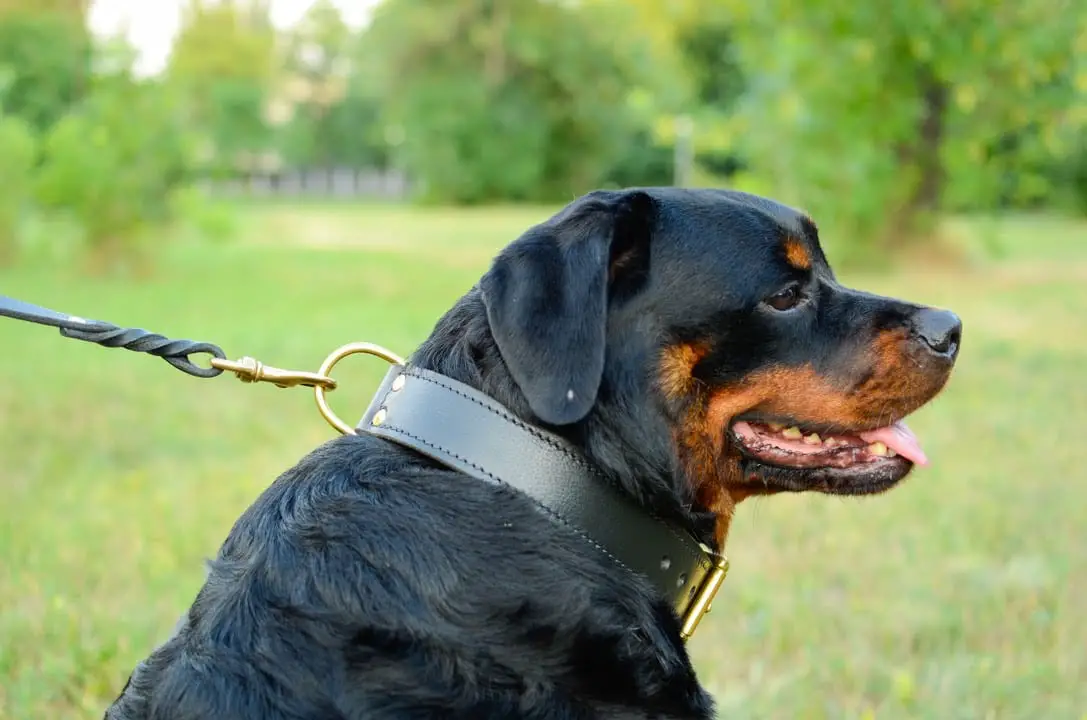
Use the manufacturer’s measuring instructions rather than buying by breed name alone. Collar length and collar width are different measurements; “a couple of inches wider than the neck” is not a useful sizing instruction.
A commonly used starting check for a large dog is room for two fingers between a flat collar and the neck, as described in the AKC collar and harness guide. Also check that it cannot readily slip over the head and is not rubbing or pressing into the skin.
Recheck fit as a puppy grows and whenever your dog’s body condition changes. Replace damaged equipment instead of assuming a worn buckle will hold for one more walk.
Check Harness Fit While Your Dog Moves
A harness should not rub behind the front legs, twist excessively or make ordinary movement awkward. Watch your dog walk and turn after fitting it, then inspect the contact areas.
A loose harness can allow escape; an overly tight one can cause discomfort. Follow the design’s adjustment instructions and get experienced help if the fit is unclear. The AKC’s harness-fitting guidance explains why comfort and movement matter alongside security.
Introduce new equipment gradually with rewards. Give your dog a chance to investigate it, and avoid turning every fitting into a chase or struggle.
A Harness Does Not Make Leash Jerks Harmless
Do not yank back when your dog pulls. A harness changes where force is applied; it does not make forceful handling automatically safe. Choose a manageable setting and work on walking together with a loose lead.
If your Rottweiler is difficult to handle, get help from a qualified reward-based trainer. For neck problems, discomfort or another medical concern, ask your veterinarian which equipment is appropriate. VCA’s equipment overview discusses the trade-offs between different designs.
Our Rottweiler training mistakes guide covers why escalating corrections is not a substitute for a clear lesson.
Think About Snagging and Unsupervised Use
Collars and harnesses can catch on objects, and attachments can become entangled during play. Assess the space your dog is using and follow guidance from your veterinarian, trainer or boarding provider about safe equipment use there.
Removing equipment should happen only in a securely contained setting where escape is controlled. Before going out again, check identification and the walking setup. Do not interpret indoor removal as advice to let a dog roam loose.
Electronic Collars Are Not Simply Harmless Beeps
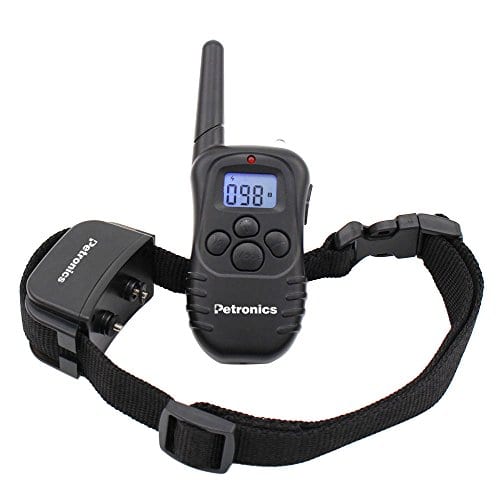
The electronic collar pictured here is not a recommendation. Products may use sound, vibration or electric stimulation, and it is misleading to describe them all as a harmless beep. The effect on the dog matters, not just the label on the box.
The American Veterinary Society of Animal Behavior recommends reward-based training. For an alternative communication tool, read our Rottweiler clicker-training guide.
Make a Quick Check Before Every Walk
- Inspect straps, stitching, clips and attachment points.
- Check fit rather than relying on last month’s adjustment.
- Watch for rubbing, reluctance or altered movement.
- Use the intended leash attachment, not an identification-tag ring.
- Choose a route and distance you can manage safely.
The best setup is one your dog can wear comfortably and you can use calmly. Equipment supports good handling; it does not replace it.