
Choosing food for a Rottweiler puppy starts with nutritional suitability, not promises of maximum muscle or a list of fashionable ingredients. Your puppy needs a complete diet appropriate for growth, including the needs of a dog expected to become large.
There is no single product that is best for every puppy. Your veterinarian can help you compare suitable options and account for growth, body condition, digestion and any medical concerns.
Look for the Nutritional Adequacy Statement
Read the statement describing the food’s intended life stage. Confirm that it is suitable for growth, including growth of large-size dogs where that distinction appears on the label. Do not rely only on the word puppy printed on the front.
The FDA explains complete and balanced labeling. Food labeled for intermittent or supplemental feeding is not intended to be the sole everyday diet unless your veterinarian directs its use.
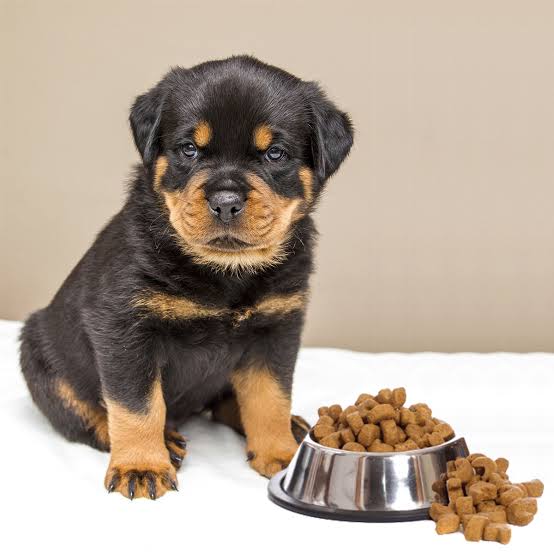
Do Not Judge Balance by Protein Alone
A protein percentage does not tell you that everything else is carbohydrate or that the food is balanced. Diets contain fat, water, minerals and other components too. Comparing wet and dry foods using only the percentages printed on the packaging can also be misleading because moisture differs.
Ask about the complete formulation rather than trying to design a diet from a few percentages. An ingredient being described as organic does not establish that a food meets all of a puppy’s nutritional needs.
Avoid Adding Supplements by Default
Do not add calcium, vitamin D or fish oil simply because your puppy is a Rottweiler. Extra nutrients can interfere with an otherwise suitable diet, and supplement choices and doses should account for the individual dog and product.
The AAHA nutrition guidance explains why life stage and breed size matter. Bring the exact food and supplement labels to your vet if you are unsure what your puppy is receiving.
Choose a Format You Can Feed Consistently
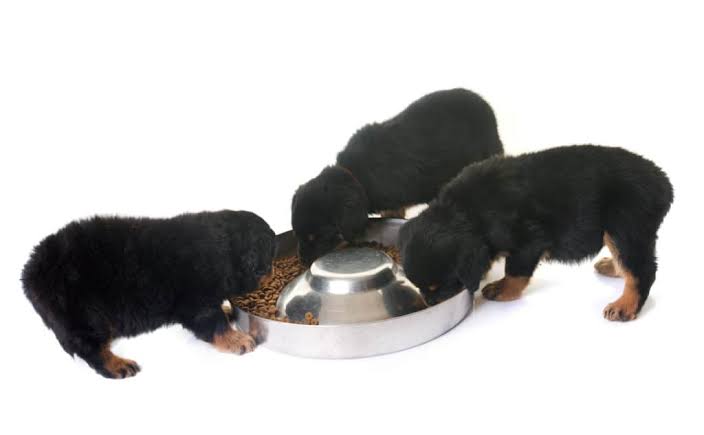
Wet or dry food can be part of an appropriate feeding plan. What matters is nutritional suitability, the total amount fed and how your puppy tolerates it. If combining foods, account for calories from both instead of giving a full portion of each.
Keep fresh water available. Wet food does not remove that need. A noticeable change in drinking, appetite or digestion is a reason to contact your veterinarian rather than assuming it is normal for the breed.
Use Portions as a Starting Point
Follow an individual feeding plan and monitor progress. A fixed calorie number based only on breed cannot account for every puppy, food or stage of growth. Measure consistently and include training rewards and other extras in the total.
Our Rottweiler puppy portion guide covers practical monitoring. For broader tracking, see the puppy growth guide.
Be Careful With Homemade Menus
A schedule of meat and vegetables is not proof of nutritional balance. If you want a home-prepared diet, have it formulated by a qualified veterinary nutrition professional and follow the recipe and monitoring plan accurately.
Do not use bones as a shortcut to balancing minerals or keeping a puppy occupied. Discuss safer chewing options with your vet. Make any planned food change gradually under appropriate guidance, and keep a record of what you feed so problems are easier to investigate.
The useful question is not which food has the strongest marketing claim. It is whether the diet is suitable, complete and working well for your growing puppy.