If your Rottweiler is anxious in the car, a longer drive is not necessarily the answer. Start by noticing when the discomfort begins: approaching the vehicle, getting inside or after it starts moving. That information helps you and your veterinarian work out a suitable plan.
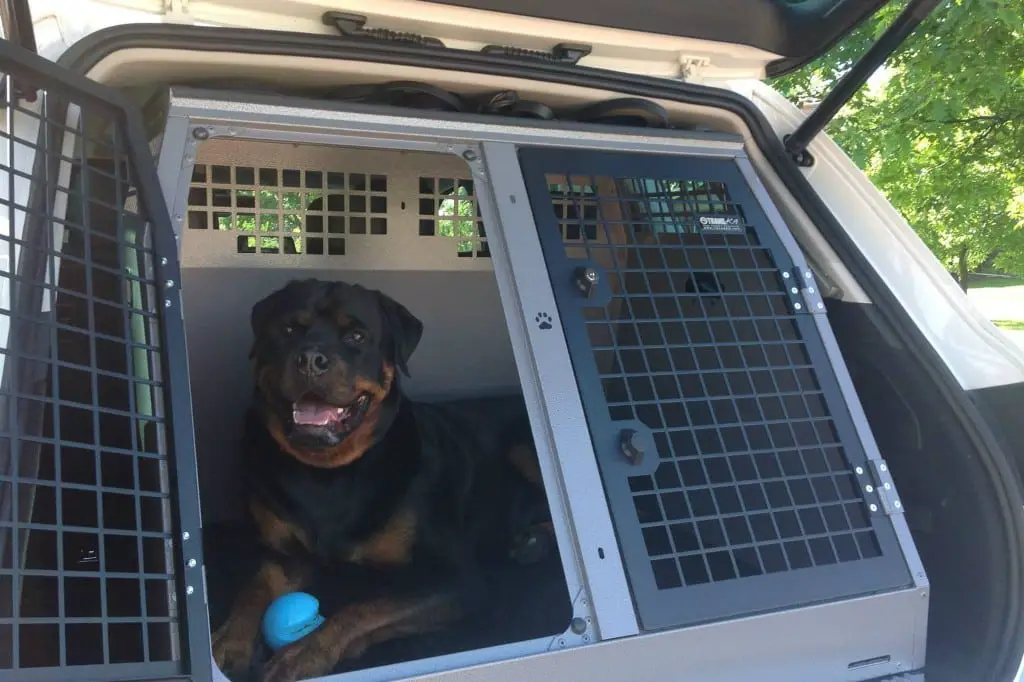
This guide focuses on comfort and preparation. For restraint, loading and stops, use our Rottweiler road-trip safety checklist. A calm-looking dog still needs a properly fitted travel setup.
Notice Signs Before They Escalate
Watch for repeated lip licking, excessive drooling, whining or difficulty settling. Vomiting can occur, but do not wait for it before recognizing that your dog may be uncomfortable. VCA describes signs associated with motion sickness and travel anxiety.
These observations do not diagnose the cause. Tell your vet what you see and when it happens, particularly if the problem is new or severe. Do not assume your dog is being disobedient or that every sign is caused by fear.
Ask About Sickness Before Repeating Trips
The Merck Veterinary Manual recommends discussing car sickness with your veterinarian. A dog that repeatedly feels unwell needs more than a distracting toy. Ask about the appropriate plan for your dog’s health and upcoming journey.
Discuss meal timing and any medication with the practice. Do not use a blanket fasting rule from the internet or give a human travel remedy without veterinary direction. Keep water available during appropriate stops rather than withholding it to avoid a spill.
Make Practice Smaller Than the Problem
Begin in a safe, comfortable setting with the vehicle parked and supervised. Depending on your dog, the first successful step might simply be approaching it without distress. Reward comfortable behavior and finish before you need to coax or force the dog onward.
Work gradually toward sitting inside, using the travel setup and eventually a brief drive. If discomfort returns, reduce the challenge and seek help. Do not keep extending the trip in the hope your dog will give up protesting.
Keep notes about what your dog managed comfortably. This prevents guessing at progress and gives a trainer or veterinarian a clearer picture. Our home-training guide explains the value of short, achievable practice.
Keep the Journey Quiet and Manageable
Plan a route with safe stopping opportunities. Drive responsibly and avoid unnecessary abrupt maneuvers, while always responding appropriately to road conditions. The driver should focus on driving; another adult can observe the dog if available.
Do not ask children to entertain an unsettled dog by touching or teasing them. Keep interactions calm and give the dog space. A familiar blanket may be useful if it is compatible with the restraint setup, but comfort items do not replace a travel plan.
At a stop, secure the lead before opening the vehicle and choose a quiet area away from traffic. There is no need for energetic ball games to exhaust the dog. Offer a suitable toilet and water break, and reassess whether continuing is appropriate.
Know When to Change the Plan
Never leave your dog alone in a parked car. The risk is not limited to a running engine; the CDC warns against leaving pets in parked vehicles. A cracked window is not a solution.
If travel remains distressing, speak to your vet and a qualified reward-based behavior professional. For an optional outing, staying with a trusted caregiver may be kinder. Progress means a dog who is coping comfortably, not one who has been tired out enough to stop moving.