A Rottweiler road trip needs more preparation than putting a blanket on the back seat. Your dog needs suitable restraint, time to become comfortable in the car and a plan for breaks. These four checks help you prepare without assuming that any seat belt, crate or barrier guarantees protection.
1. Choose and Fit the Travel Setup Before Departure
Your Rottweiler should not roam around the vehicle or distract the driver. The FDA’s travel guidance recommends proper restraint and warns about front-seat airbags. Plan where the dog will ride before loading luggage.
Check the exact product’s instructions, size limits, attachment requirements and compatibility with your vehicle. A walking harness is not automatically a crash restraint. Likewise, a loose crate or a barrier that limits movement should not be treated as proof of crash protection.
The Center for Pet Safety publishes test results that can help you investigate products. Look at the specific model and tested setup, not just an advertisement saying “safe.” Do not improvise extra straps or extensions: the organization has issued an extension-tether warning. Follow the system’s fitting directions, and remember that no equipment makes injury impossible.
2. Practice Before the Long Journey
Introduce the setup while parked in a safe place. Let your dog become comfortable getting in, settling and getting out with you. Keep the first experiences easy rather than beginning with a full-day drive.
Try a short journey and notice whether your dog settles, drools, becomes distressed or seems nauseated. Speak to your vet about sickness or persistent fear before the trip. Do not give human medication or a sedative on your own.
A crate should not be used for the first time on departure day. Our guide to everyday training skills explains gradual, reward-based practice that can support calm handling. The same patient approach is useful when teaching a dog to wait while you open a door.
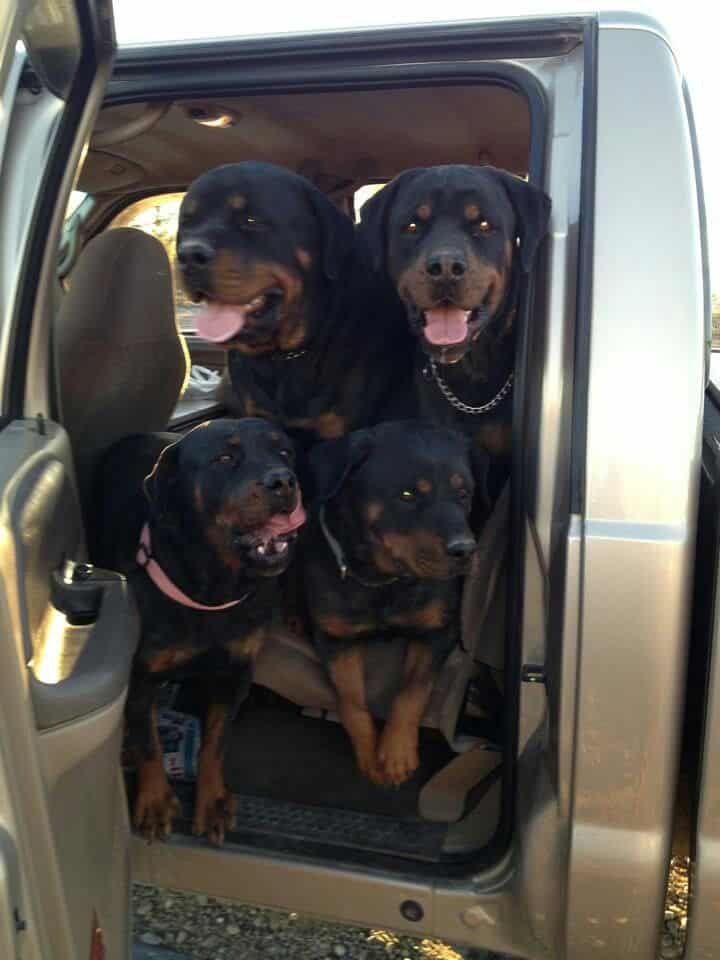
Keep your dog secured inside the vehicle during travel; an open-window photograph is not a safety demonstration.
3. Plan Stops, Water and Safe Exits
Allow time for toilet breaks and water, and choose stopping places where you can move away from traffic. Keep the lead accessible. Secure your dog before opening a door or releasing the travel restraint so they cannot jump out into an unfamiliar area.
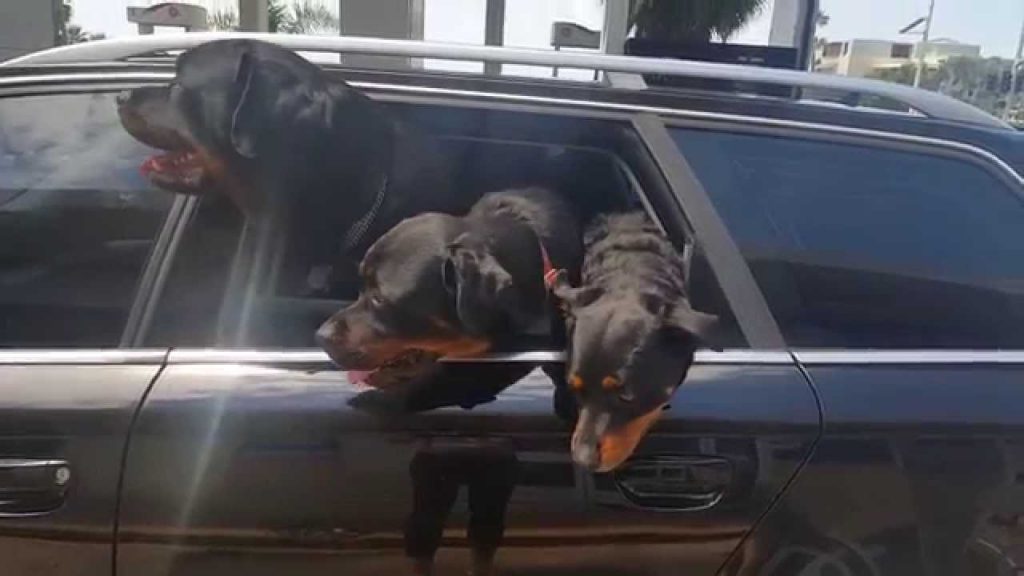
Do not let your dog hang out of the window. Keep the cabin comfortable and never leave them alone in a parked vehicle. CDC travel advice emphasizes this parked-car precaution. A slightly open window is not a replacement for staying with your dog and managing the temperature.
Pack familiar food, a bowl, waste bags, any prescribed medication and identification details. Keep the items you need at a stop within reach rather than buried beneath luggage. If another adult is traveling, agree who handles the dog and who checks doors and bags.
4. Confirm the Destination and Have a Backup Plan
Check accommodation rules directly, including any size or breed restrictions, before paying. Confirm which records are needed along the route and at the destination; requirements vary, especially when crossing borders.
Save your regular veterinary practice’s details and locate veterinary help near your destination. Carry the dog’s records in a form you can access without relying entirely on mobile reception.
If the trip cannot meet your dog’s needs, a trusted caregiver may be the better choice. Our guide to traveling without your Rottweiler helps you consider that option. A successful holiday is one your dog can manage comfortably, not simply one that allows dogs.