

Rottweiler grooming includes more than brushing the coat. A calm check of the eyes, ears, and mouth can help you notice a change early and keep everyday care comfortable. The aim is not to clean aggressively or diagnose a problem at home.
Choose a quiet moment, use gentle handling, and reward cooperation. If your dog appears painful or frightened, stop. A veterinary demonstration can make routine care easier and help you understand what is normal for your dog.
Look at the Ears Before Cleaning
Gently lift the ear flap if your dog is comfortable and look for changes such as redness, unusual discharge, odor, or sensitivity. Repeated head shaking or scratching is a reason to contact your veterinarian. It does not prove that the dog has allergies; different problems can cause similar signs.
Do not probe the canal with cotton swabs or hard objects. If the ear is painful or inflamed, ask for advice before putting anything into it. Avoid choosing an antifungal or “natural” treatment based only on how the ear looks.
Use an Individual Ear-Care Plan
Not every dog needs the same cleaning schedule. Ask your veterinarian whether cleaning is needed and which product to use. Follow the demonstrated technique and the product directions rather than improvising with household liquids.
Cornell’s ear-cleaning guide advises stopping and consulting a veterinarian if cleaning seems painful. Keep sessions manageable and reward your dog for participating. Repeated discomfort is not something to push through to finish the job.
Treat Eye Changes Promptly
Observe whether both eyes look comfortable and whether there is new redness, discharge, swelling, or squinting. Do not assume that the shape of a Rottweiler’s eyelids rules out an eye problem.
For small amounts of debris on the surrounding fur, ask your veterinary team about gentle external cleaning. Avoid rubbing the eye itself or reusing an ear-cleaning pad near the eyes. Never use leftover medication or human eye drops without veterinary direction.
VCA identifies squinting or holding an eye closed as a reason for prompt care. An injury, marked pain, or sudden vision concern needs urgent veterinary attention rather than a wait-and-see grooming routine.
Build a Tooth-Brushing Habit
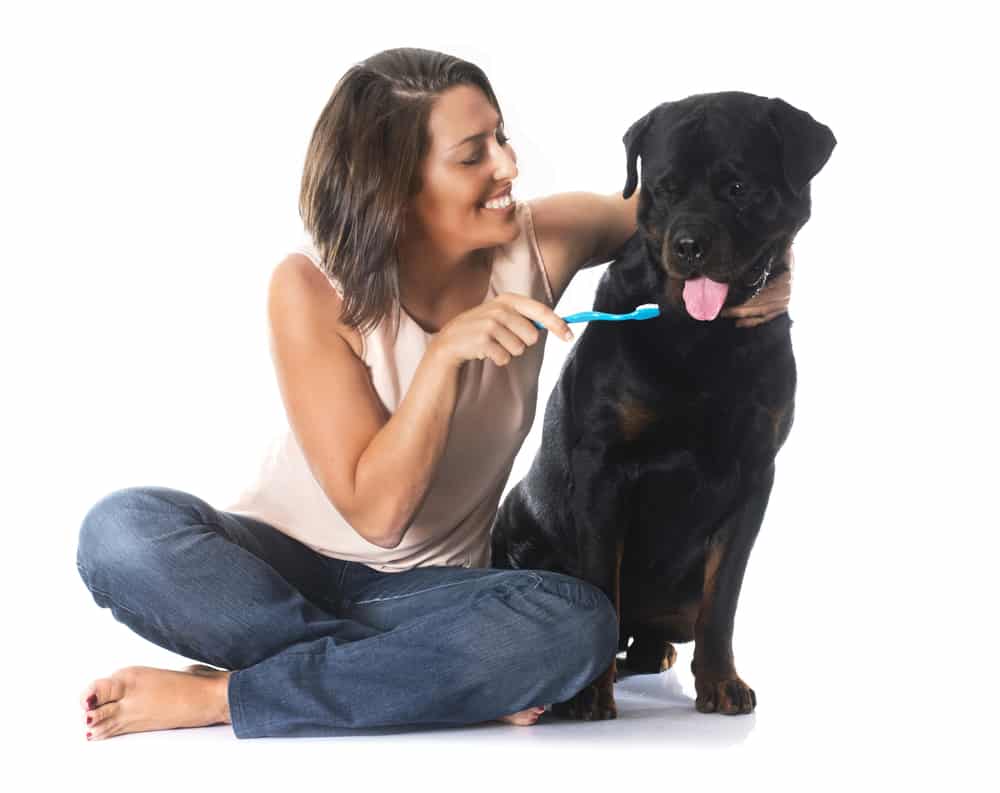
Use pet toothpaste and a suitable soft brush. Begin with brief, comfortable handling and build gradually instead of forcing the mouth open. Ask your veterinarian to show you a technique that suits your dog.
AAHA recommends daily brushing to help reduce plaque. Home care does not replace dental examinations or treatment. If the mouth seems sore, get advice before continuing.
Bad breath, red gums, drooling, or difficulty eating should not simply be covered up with a dental treat. Likewise, ordinary dry food and hard bones are not a complete dental-care plan. Discuss suitable products and avoid objects that may damage teeth.
Keep Checks Short and Consistent
You do not have to do every task in one session. Practice comfortable handling separately from necessary medical treatment. Keep supplies ready, work at your dog’s pace, and avoid restraining them through a struggle.
For coat care, see our Rottweiler shedding guide. If you are considering products for coat, teeth, or nails, read what to ask before buying supplements.
A useful grooming routine helps you notice changes and maintain comfort. It is not a guarantee against disease, and a new symptom is a reason to adjust the plan with professional help.