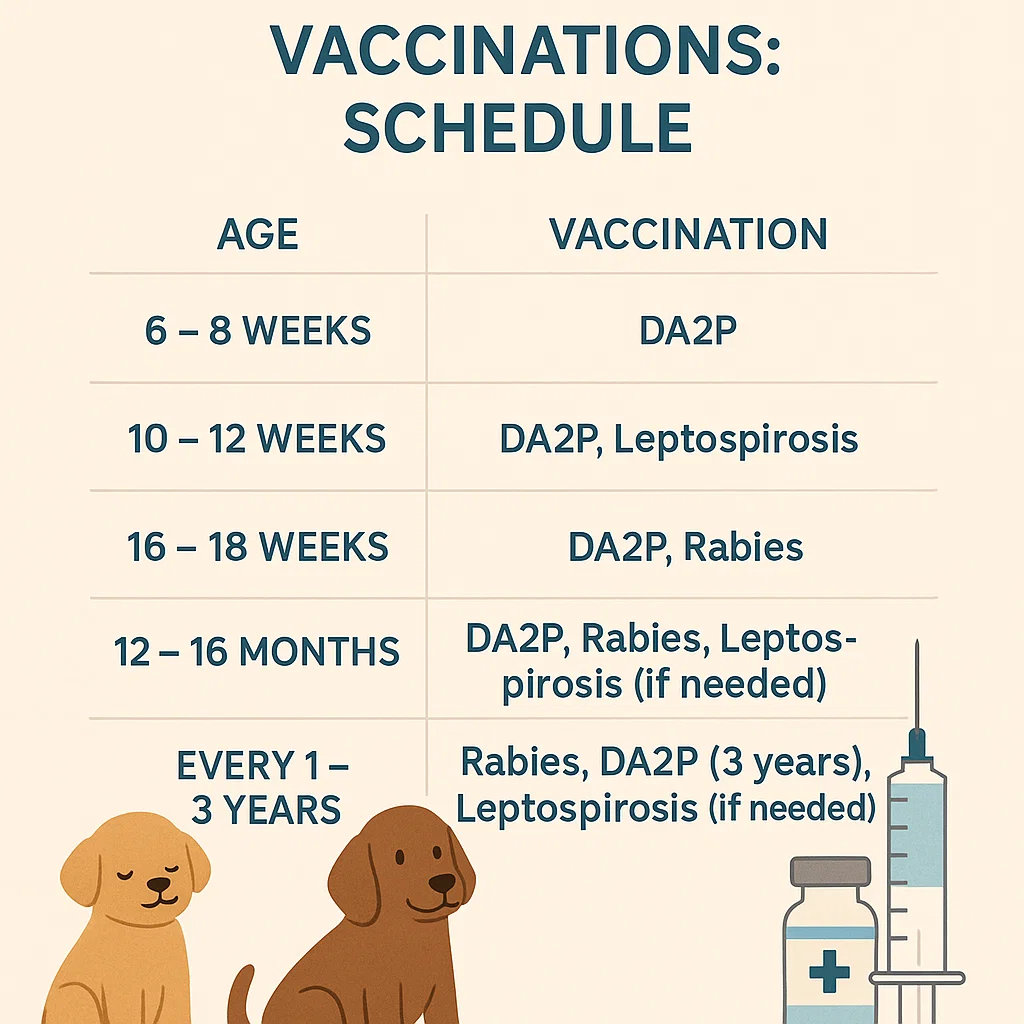
A puppy and dog vaccination schedule should be planned with your veterinarian, using your dog’s records, age, health, location and exposure. A general chart can explain the process, but it cannot replace the dates and products chosen for your Rottweiler.
Bring every available record to the first appointment. “Had some shots” is not enough information to know which protection is complete or what needs to happen next.
Core Vaccines and Individual Risk
Core vaccines protect against important diseases and are broadly recommended. Other vaccine decisions depend on exposure and local circumstances. Do not assume that the same list applies unchanged in every country.
The AAHA canine vaccination guidelines were updated in 2024 to include leptospirosis as a core recommendation. Older articles may still describe it only as optional. Ask your veterinarian how current guidance and available products apply where you live.
Why Puppies Receive a Series
Puppy vaccination is not just about counting injections. Timing matters because protection passed from the mother can interfere with the response to vaccination and varies between puppies.
The 2024 WSAVA guidelines recommend repeated core puppy doses at intervals of two to four weeks, with the final dose at 16 weeks or older. Higher-risk circumstances may require a different plan. Do not assume that a dose at 14 weeks always completes the series.
Your vet will also plan the later follow-up dose and any other vaccines needed. Keep the next appointment in writing rather than trying to reconstruct the schedule from memory.
Rabies Timing Requires Local Advice
Rabies vaccination timing and documentation must follow the applicable requirements and the product used. A generic 10–12-week instruction is not a reliable rule for every place or vaccine.
Ask your veterinary practice which date applies and what certificate you should keep. If you plan to travel, raise that early; do not assume ordinary household records meet every travel requirement.
Adult Boosters Are Not All on One Interval
Different vaccines have different revaccination schedules. Your adult dog does not necessarily need every injection at every annual checkup, but a yearly health review is not a reason to ignore due dates.
Use the AAHA age-and-lifestyle recommendations as discussion material, not a prescription for your individual dog. Tell your vet about boarding, group activities, travel and changes in exposure.
If records are missing or a booster is overdue, contact the practice. They can work out the appropriate catch-up plan; do not simply restart or skip doses yourself.
Senior Dogs Still Need an Individual Plan
Being older does not automatically mean a dog should stop vaccination or receive fewer vaccines to avoid “overwhelming” the immune system. Decisions should reflect medical history, current health and risk, not an age label alone.
Discuss any chronic conditions and previous reactions. Antibody testing may be useful for certain questions, but it is not a blanket replacement for every vaccine or a way to disregard rabies requirements.
Ask What to Watch for After the Appointment
Tell the veterinarian about any earlier reaction before vaccination. Mild discomfort or temporary tiredness can occur; the practice should explain what to expect and when to call. AAHA’s owner guidance discusses benefits and possible adverse effects.
Breathing difficulty, collapse or a rapidly developing severe reaction needs urgent veterinary attention. Contact the clinic or an emergency service rather than waiting for an online answer. If you are unsure whether a change is expected, call for advice.
Keep Socialization Safe While Protection Develops
Ask your veterinarian about suitable classes and controlled experiences during the puppy series. Avoid treating the choice as either total isolation or unrestricted contact with unfamiliar dogs.
Our Rottweiler puppy socialization guide covers comfortable introductions. For the wider routine, see our Rottweiler health-care guide.
Leave With a Written Record
Before you go, confirm which vaccines were given, what remains due, the next appointment and whom to contact about a reaction. Keep a copy that you can share with another veterinary practice or boarding provider.
The useful schedule is the one created for your dog and kept up to date. Review it when circumstances change, rather than relying indefinitely on a chart found online.