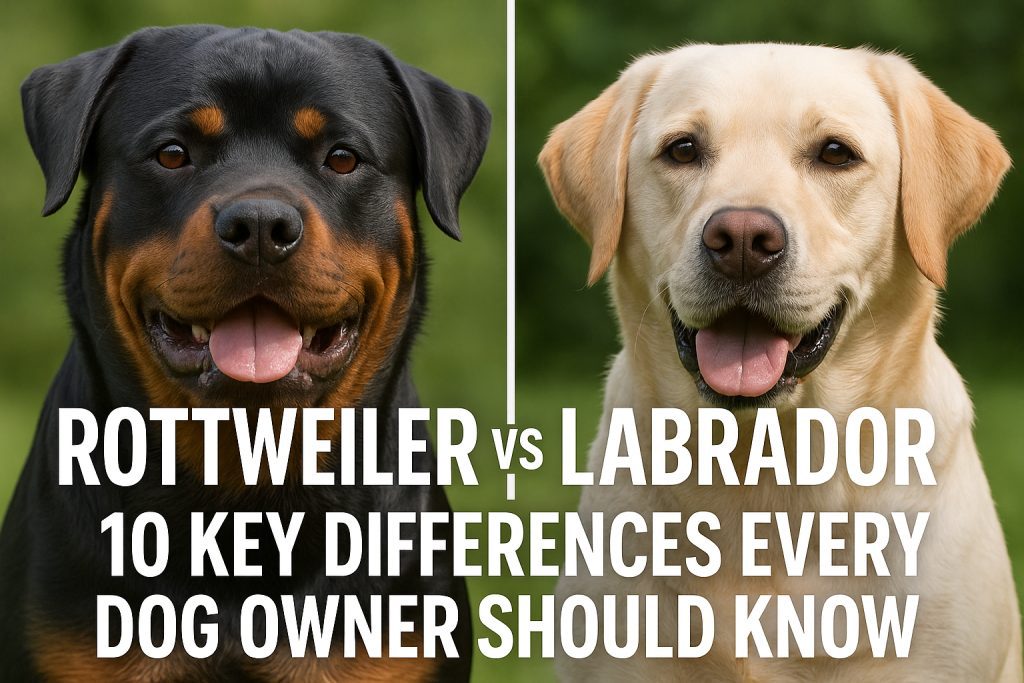
Comparing a Rottweiler vs Labrador is useful if you focus on daily life rather than asking which breed is “better.” Both can be rewarding companions, but neither arrives trained, safe in every situation or suited to every household.
Breed tendencies provide a starting point. The particular dog’s age, health, upbringing and temperament still matter. These ten questions help you compare what ownership would involve.
1. What Kind of Social Style Suits Your Home?
The AKC describes the Rottweiler as a powerful working dog that can be reserved outside the family. Its Labrador profile emphasizes an outgoing, energetic companion. Those descriptions are tendencies, not promises about an individual.
If visitors are frequent, ask how the dog actually handles arrivals. Do not select a Rottweiler for imagined aggression or assume a Labrador will enjoy every greeting. Both need comfortable space and sensible introductions.
2. Can You Manage the Dog’s Strength?
Both breeds can be physically substantial, and a pulling dog can be difficult to handle. Consider your ability to manage the individual dog on a lead, help them into transport when necessary and provide an appropriate resting area.
Meet adult dogs rather than judging the commitment by a small puppy. Ask about likely adult size when choosing a puppy, but do not treat a breed weight range as a target to reach through extra food.
3. What Training Support Will You Provide?
Neither breed needs intimidation to learn. Clear rewards, manageable sessions and consistent household rules matter more than claims about intelligence rankings. A Labrador’s friendly reputation does not remove the need to teach jumping, recall and lead skills.
Our home-training guide gives examples of small everyday lessons. Budget for help if you are inexperienced, and choose a professional who uses reward-based methods.
4. What Activity Can You Sustain?
Think beyond a large garden. Can you provide comfortable walks, play and mental activity on ordinary workdays as well as weekends? Different dogs enjoy different activities; a breed label does not tell you exactly how many hours to schedule.
The AKC notes that exercise needs vary with health and energy level. Adjust for age and fitness. A puppy or a dog with a medical problem should not be pushed into a vigorous adult routine.
5. Are You Prepared for Coat Care?
A short coat is not the same as no shedding. Plan for brushing, cleaning bedding and checking the skin, ears and nails. Ask the breeder, rescue or groomer what the individual coat needs rather than relying on a fixed once-a-week rule.
Introduce handling gradually and reward cooperation. Persistent itching or a sore ear is a reason for veterinary advice, not simply more washing.
6. What Health Records Are Available?
Ask for actual health records and relevant parental screening information when buying a puppy. “The parents are healthy” is not the same as documented testing. With a rescue dog, ask what has been assessed and what remains unknown.
Neither breed is free of inherited or acquired disease. A checkup and an individual preventive-care plan are more useful than assuming that choosing the supposedly healthier breed eliminates risk. Keep funds or suitable insurance for unexpected care.
7. How Will Children and Pets Be Managed?
No breed description guarantees safe behavior around children or other animals. Plan active adult supervision, separate resting spaces and a way to prevent unwanted interactions. Children should not disturb a dog that is eating, sleeping or trying to move away.
Ask about observed behavior in comparable situations, especially when adopting an adult. Do not use an unfamiliar child or pet to test whether a dog is tolerant.
8. How Much Time Will the Dog Spend Alone?
Be realistic about work, travel and daily errands. Arrange appropriate care and build alone-time skills gradually; do not expect either breed to cope with a long absence simply because you exercised first.
Ask a rescue or breeder about the dog’s current routine. If separation causes serious distress, seek professional support instead of expecting a different toy to solve it.
9. Does Your Housing Allow the Dog?
Confirm rules with your landlord, housing provider and insurer before committing. Check the exact terms rather than assuming a Labrador or Rottweiler is automatically accepted. Consider transport and any regular boarding needs too.
A quiet resting area, access to suitable outings and a workable care routine matter alongside floor space. A big home does not compensate for little attention.
10. Have You Met the Individual and Asked Enough Questions?
Spend time discussing behavior, health, care and support after adoption or purchase. Ask what challenges the dog has, not only what makes them appealing. Avoid anyone promising a perfect guard dog, guaranteed family safety or effortless training.
Our Rottweiler owner checklist can help you assess the commitment. Choose the dog whose needs you can meet consistently, not the winner of a popularity contest.