Which dog has the strongest dog bite? The Kangal is often placed first in online rankings, followed by other large guardian breeds. But the exact PSI numbers attached to these lists deserve caution. The research reviewed for this article does not establish a reliable, universal ranking of every dog breed.
For Rottweiler owners, the useful question goes beyond whether one breed can bite harder than another. A Rottweiler is a powerful dog, and responsible handling matters every day. Understanding what bite-force measurements mean helps you separate a meaningful scientific finding from a dramatic headline.
This guide explains the difference between force and pressure, puts familiar breed comparisons into context, and shows what owners should focus on when living with a strong dog.
What Does Dog Bite Force Actually Measure?
Bite force describes the force produced when the jaws close. Scientific studies often report it in newtons. PSI means pounds-force per square inch: it measures pressure, which depends on both the force and the area over which that force acts. A figure in pounds of force cannot simply be relabeled as PSI.
Think of pressing your palm against a cushion, then pressing a fingertip against it. The same force concentrated over a smaller area produces more pressure. That is why the contact area matters when discussing teeth and pressure.
Before comparing two published numbers, ask whether they use the same units and describe the same kind of measurement. A ranking that switches between pounds, newtons, and PSI without explaining the conversion is not a sound comparison.
Why One Number Cannot Describe Every Dog in a Breed
A bite recorded from one dog during one test is a measurement of that dog under those conditions. It is not automatically the maximum, minimum, or average for the breed. Even a carefully obtained result needs context: how many dogs were tested, how they were selected, and how consistent the measurements were.
A helpful comparison would use the same equipment, testing procedure, tooth position, and clearly described sample across breeds. Without those details, a precise-looking number can create more certainty than the evidence supports.
What Research Says About Strong Dog Bites
Research on domestic dog skulls links predicted biting force to body and skull size. Skull shape also matters, and its relationship with force changes with size. These findings help explain why large dogs can produce substantial force, but they do not provide a simple championship table for pet breeds.
Researchers also distinguish measurements from living animals from estimates calculated using skull dimensions or computer models. Those approaches answer different questions. An estimate should be identified as an estimate, especially when it is compared with a direct measurement.
A veterinary review of bite-force measurement describes considerable variation caused by a dog’s willingness to bite, the testing situation, and the measurement method. Where the bite is measured also matters. Results recorded near the back teeth should not be treated as interchangeable with measurements at the canine teeth.
Kangal, Rottweiler, Mastiff and German Shepherd Compared
These breeds frequently appear in discussions of the strongest dog bite. Their physical strength is real, but their care needs and working backgrounds are more useful to a prospective owner than an unsupported numerical ranking.
Kangal: A Powerful Livestock Guardian
The Kangal is a large flock-guarding dog with a long history of protecting livestock. That background helps explain its strength and independent guardian role. It does not justify describing the breed as the most vicious dog.
The frequently repeated 743 PSI claim should not be presented as a guaranteed measurement for all Kangals. Before accepting it as a breed record, look for the original study, the sample, the units, and the testing method. A number repeated on many websites is still only as dependable as its original evidence.
Rottweiler: Strength Needs Everyday Guidance
The Rottweiler is a robust working breed with a muscular build. Its appeal includes confidence, intelligence, and a close relationship with its family. Those qualities need appropriate socialization, training, exercise, and thoughtful management.
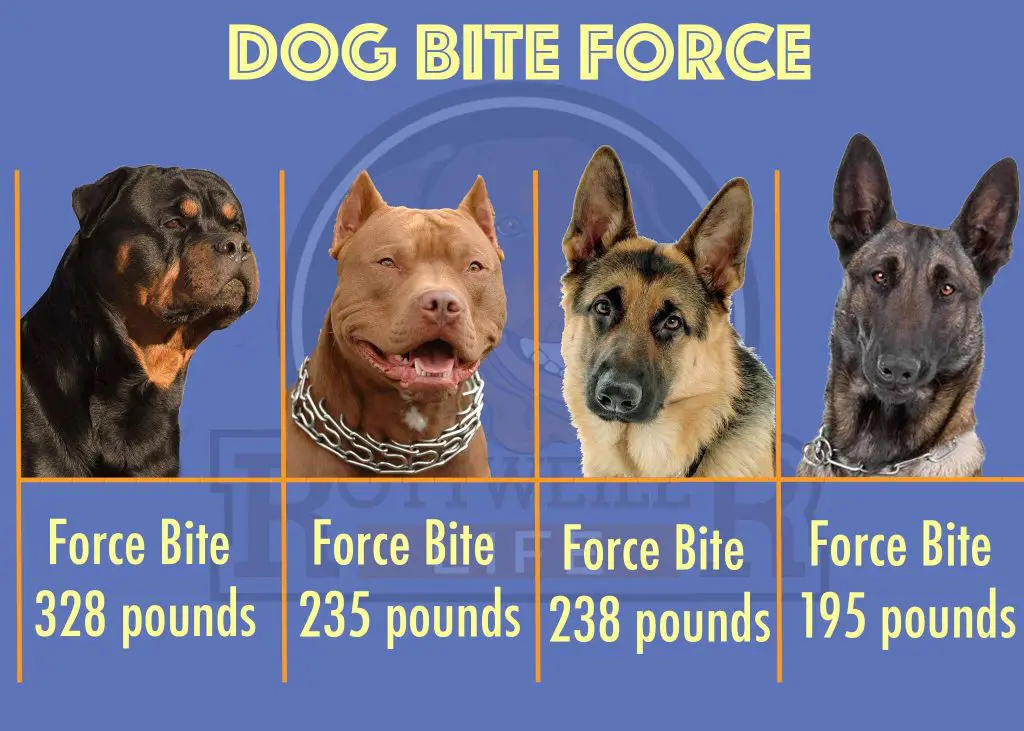
You may see 328 PSI quoted for the Rottweiler. That figure should not be treated as a fixed specification for your dog or proof of its temperament. Understanding the Rottweiler breed and its needs gives owners a more practical starting point than comparing intimidating statistics.

Mastiff: Large Size Is Only Part of the Picture
The Mastiff is a very large, heavily built breed. Its substantial size is relevant to any discussion of physical power. Breed descriptions also emphasize a dignified, generally docile character, showing why strength and disposition should be discussed separately.
The familiar 556 PSI figure should not be used as a universal Mastiff measurement. For someone considering the breed, a better checklist covers space, daily care, handling, training, and the cost of supporting a very large dog throughout its life.
German Shepherd: More Than a Bite Statistic
The German Shepherd is an agile, muscular working dog valued for intelligence and versatility. Its work in demanding roles involves training and cooperation with a handler, not simply the force of its jaws.
A quoted bite figure cannot tell you whether an individual German Shepherd will cope well with your household, other animals, or a busy neighborhood. Those decisions need an assessment of the actual dog and the life you can provide.
Does a Stronger Bite Mean a More Dangerous Dog?
A bite-force figure describes physical capacity under particular conditions. It does not describe the likelihood that a dog will bite. Any dog can bite, including a familiar family pet, and a powerful dog deserves careful management even when it usually behaves gently.
Fear, pain, and stressful interactions can be relevant to biting. A sudden change in behavior warrants veterinary attention. Avoid assuming that growling, avoidance, or snapping is simply a breed trait that must be accepted or challenged.
Do not choose a dog because it appears high on a strongest-bite list. Meet suitable adult dogs, learn about their needs, and honestly assess your experience, household, and available time. A good match is one you can care for responsibly.
Practical Priorities for Rottweiler Owners
Build Useful Skills With Rewards
Reward-based training is recommended by veterinary behavior specialists. Start with everyday skills such as responding to a name, coming when called, settling on a mat, and releasing a toy on cue. Practice in easy situations before expecting reliability around distractions.
For example, a quiet room gives a dog a much easier place to learn than a busy doorway with visitors arriving. Keep sessions manageable, reward the response you want, and increase the difficulty gradually. Our Rottweiler training articles offer topics to explore as you build that routine.
Manage Interactions Before They Become Difficult
Supervise children actively and never leave a baby or young child alone with a dog. Give dogs space while eating or resting, and provide somewhere quiet they can retreat. Use doors, gates, or separate rooms when you cannot supervise an interaction.
If you are concerned about guarding, snapping, or repeated threatening behavior, arrange a veterinary assessment and qualified behavior help. Management should begin while you seek advice. The Rottweiler behavior section can help you identify subjects to discuss with a professional.
Frequently Asked Questions
Which Dog Has the Strongest Bite in PSI?
The Kangal is often named in online lists, but the studies reviewed here do not establish a universal, standardized PSI ranking across breeds. Treat exact rankings cautiously unless the original testing methods and results are available.
Is a Rottweiler’s Bite Stronger Than a German Shepherd’s?
A comparison between two individual dogs cannot settle the question for every member of both breeds. Size, anatomy, and testing conditions all need to be considered. Neither breed should be selected or judged solely on a bite-force claim.
Should I Test My Dog’s Bite Strength?
No. There is no everyday care benefit in trying to provoke a maximum-force bite or improvising a test at home. Put that effort into safe play, cooperative handling, training, and veterinary care instead.
The most useful lesson from a strongest dog bite comparison is that powerful dogs need informed owners. Understanding your Rottweiler, respecting its boundaries, and teaching practical skills will serve you both far better than chasing the biggest number.