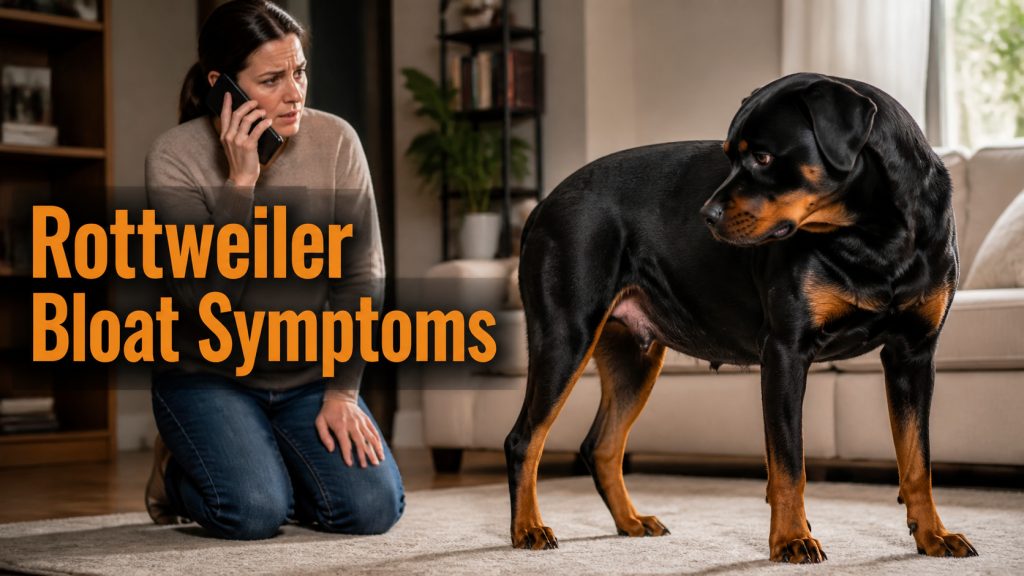
Rottweiler bloat symptoms demand immediate action. If your Rottweiler has a swollen or tight abdomen, repeatedly tries to vomit without bringing anything up, appears restless, drools heavily, becomes weak, or collapses, treat it as an emergency. Call the nearest emergency veterinary hospital and leave immediately. Do not wait for the symptoms to improve.
Canine bloat can progress with frightening speed. The term is often used for gastric dilatation, in which the stomach expands with gas, fluid, or food. The most dangerous form is gastric dilatation-volvulus, commonly shortened to GDV. In GDV, the enlarged stomach rotates and traps its contents. Blood flow can be restricted, pressure can interfere with breathing and circulation, and shock can develop rapidly.
Rottweiler owners should know the warning signs even if their dog has never had a digestive problem. Rottweilers are large dogs with substantial chests, and GDV can affect dogs of many breeds and sizes. Recognizing a suspicious combination of symptoms and reaching emergency care quickly can make a critical difference.
What Is Bloat in Dogs?
Simple gastric dilatation and GDV are related but not identical. With gastric dilatation, the stomach becomes enlarged. With GDV, the stomach also twists. An owner cannot reliably tell the difference at home, and both situations require urgent veterinary assessment because dilatation can progress and other emergencies can look similar.
When the stomach twists, gas and fluid cannot escape normally. The enlarged stomach presses on major blood vessels and reduces blood returning to the heart. It can also push against the diaphragm, making it harder for the lungs to expand. At the same time, blood supply to the stomach wall and sometimes the spleen may be compromised. This is why GDV is not ordinary indigestion and why home treatment is unsafe.
Rottweiler Bloat Symptoms Owners Should Recognize
Early signs may be subtle, but they often occur in combination. Watch for:
- Repeated retching or attempts to vomit with little or nothing produced
- A visibly swollen, enlarged, or tight-looking abdomen
- Restlessness, pacing, or an inability to get comfortable
- Excessive drooling or strings of saliva
- Looking repeatedly at the abdomen
- Standing with the legs spread or taking a “prayer” position with the front end lowered
- Panting or rapid, difficult breathing
- Signs of abdominal pain, including guarding or reluctance to lie down
- Pale or grayish gums
- A rapid heartbeat, weakness, staggering, or collapse
Not every dog develops a dramatic, balloon-like abdomen, especially early in the emergency. A deep-chested dog may carry some of the distension beneath the rib cage where it is less obvious. Unproductive retching plus restlessness or abdominal discomfort is enough reason to contact an emergency veterinarian immediately.
What to Do If You Suspect Bloat
1. Call an Emergency Veterinary Hospital
Tell the clinic that you are on the way with a Rottweiler showing possible GDV symptoms. Briefly describe the retching, abdominal change, gum color, breathing, and ability to stand. Calling ahead lets the hospital prepare a team while you travel, but the conversation should not delay departure.
2. Transport Your Dog Immediately
Move calmly but quickly. If possible, have another adult drive while someone monitors the dog. Keep the vehicle ventilated and avoid unnecessary pressure on the abdomen. A weak dog may need careful support from more than one person because an adult Rottweiler is heavy.
3. Do Not Give Food, Water, or Medication
Do not offer a meal, a large drink, antacids, pain medicine, or gas remedies unless a veterinarian specifically directs you to do so. Do not attempt to induce vomiting. These actions will not untwist a stomach and could create additional risks or delay surgery.
4. Do Not Press or Massage the Abdomen
Owners cannot safely decompress a bloated stomach at home. Procedures used to relieve stomach pressure require veterinary judgment, sterile equipment, and monitoring. Your most useful action is fast transportation to an equipped hospital.
5. Bring Useful Information Without Delaying
If it is immediately available, tell the team when the symptoms began, when the dog last ate, any medications or medical conditions, and whether the dog has had previous abdominal surgery. Do not spend valuable time assembling records if doing so slows your departure.
How Veterinarians Diagnose GDV
The veterinary team will assess circulation, breathing, pain, heart rate, gum color, and abdominal distension. Abdominal X-rays are commonly used to confirm the stomach’s position and distinguish GDV from other causes of enlargement. Blood tests help evaluate shock, organ function, electrolytes, and the dog’s overall condition. An electrocardiogram may be used because abnormal heart rhythms can occur.
Treatment often begins immediately with stabilization. This may include intravenous fluids, oxygen, pain relief, and decompression of the stomach. When the stomach has twisted, surgery is required to return it to the correct position and evaluate the stomach and surrounding organs. Damaged tissue may need to be removed.
During surgery, veterinarians generally perform a gastropexy, attaching the stomach to the abdominal wall to reduce the chance of future twisting. Hospital monitoring after surgery is important because shock, heart rhythm disturbances, infection, and other complications can develop.
Why Speed Matters
GDV is rapidly progressive. The longer the stomach remains twisted and circulation remains impaired, the greater the risk of tissue death, shock, abnormal heart rhythms, organ injury, and death. A dog may still be able to walk during the early stage, so owners should not use mobility as proof that the situation is mild.
It is safer to have an emergency veterinarian rule out GDV than to watch a suspicious combination of symptoms at home. If you are uncertain, call the emergency hospital, describe what you see, and follow its instructions while preparing to leave.
Rottweiler Bloat Risk Factors
No single factor explains every case, and GDV can occur even when an owner has done everything responsibly. Factors associated with increased risk in dogs include:
- Large body size and a deep chest
- Older age
- A parent, sibling, or offspring that experienced GDV
- Eating one large meal per day
- Eating very rapidly
- A nervous, fearful, or highly stressed temperament
- Exercising soon after a large meal
- Previous GDV or gastric dilatation
Risk is not a diagnosis. Many dogs with one or more risk factors never develop GDV, while a dog without an obvious history may still experience it. The practical response is awareness, sensible feeding management, and a conversation with your veterinarian about the individual dog.
How to Reduce the Risk of Bloat
Feed Smaller, More Frequent Meals
Instead of one very large daily meal, ask your veterinarian whether two or more measured meals suit your Rottweiler. Portion control also helps maintain a healthy body condition. Make diet changes gradually unless the veterinary team gives different instructions.
Slow Down Rapid Eating
A veterinarian-approved slow feeder or another safe feeding method may help a dog that gulps food. Supervise any new product to ensure the Rottweiler cannot chew, flip, or break it. Feeding dogs separately can reduce competition and frantic eating in multi-dog homes.
Plan Calm Time Around Meals
Avoid vigorous running, rough play, or intense training immediately after a substantial meal. Gentle movement for toilet needs is different from hard exercise. Your veterinarian can help you design a meal and activity schedule suited to your dog’s age, health, and routine.
Discuss Bowl Height With Your Veterinarian
Raised bowls were once widely recommended to prevent bloat, but they are not a general prevention strategy and may be associated with increased risk in some dogs. Use an elevated setup only when your veterinarian recommends it for another medical or mobility reason.
Reduce Avoidable Mealtime Stress
Create a quiet feeding area and avoid rushing or crowding the dog. Consistent routines may help dogs that become highly aroused around food. If your Rottweiler guards food, work with a qualified reward-based professional rather than confronting or testing the dog.
Know Your Dog’s Family History
If possible, ask the breeder whether a parent, sibling, or close relative has experienced GDV. Share that information with your veterinarian. Family history may influence decisions about preventive surgery.
Should a Rottweiler Have a Preventive Gastropexy?
A prophylactic gastropexy attaches the stomach to the abdominal wall before GDV occurs. It is intended to prevent the stomach from twisting, although a dog may still experience gastric dilatation. The procedure may be performed as a standalone surgery or at the same time as another planned abdominal procedure.
Whether it is appropriate for a particular Rottweiler depends on body structure, age, family history, medical condition, lifestyle, and the veterinarian’s assessment. Owners of deep-chested Rottweilers or dogs with an affected close relative should discuss the potential benefits, limitations, surgical approach, recovery, and cost with their veterinarian. Preventive gastropexy does not replace symptom awareness; a gastropexied dog with sudden abdominal distress still needs veterinary attention.
Bloat or an Upset Stomach?
Vomiting, gas, restlessness, abdominal pain, and appetite loss can occur with many conditions, including intestinal obstruction, pancreatitis, toxin exposure, and severe gastroenteritis. GDV becomes especially concerning when there is repeated unproductive retching, progressive abdominal enlargement, marked restlessness, pale gums, weakness, or collapse.
Do not use an online symptom list to make a final diagnosis. When potentially life-threatening signs are present, emergency evaluation is the correct next step. Our guide to foods that are toxic to dogs covers another reason vomiting or weakness can require urgent care.
Preparing Before an Emergency Happens
Save the phone number and address of your nearest 24-hour veterinary hospital in your phone. Confirm the route and whether the hospital accepts walk-in emergencies. Keep a leash, secure collar or harness, and a large blanket accessible. Family members should know that dry heaving with a swollen abdomen is not a “wait until morning” symptom.
Maintain an up-to-date medication list and basic medical history. If your Rottweiler is insured, keep the policy information accessible, but do not delay treatment while searching for paperwork. For other breed-specific risks, see our guide to early osteosarcoma signs in Rottweilers and our broader Rottweiler care and health library.
Frequently Asked Questions
Can a Rottweiler survive GDV?
Many dogs survive when the condition is recognized and treated promptly, but the outcome depends on how advanced the emergency is, the degree of shock and tissue injury, and whether complications occur. Immediate veterinary care provides the best chance.
Can bloat resolve on its own?
An owner cannot determine at home whether stomach enlargement will progress or whether twisting has occurred. Suspected bloat or GDV should never be watched at home in the hope that it resolves.
Will a dog with bloat always have a visibly large stomach?
No. Distension can be difficult to see early or may be partly hidden beneath the ribs. Repeated dry heaving, restlessness, drooling, pain, breathing changes, pale gums, weakness, or collapse remain serious warning signs.
Does gastropexy guarantee that bloat will never happen?
No. Gastropexy is designed to greatly reduce the risk of the stomach twisting, but it does not prevent every episode of stomach dilatation. Owners must still respond to concerning symptoms.
Final Emergency Reminder
A Rottweiler that is repeatedly trying to vomit without producing anything, has a swollen or painful abdomen, drools, paces, pants, becomes pale or weak, or collapses needs immediate veterinary attention. Call the emergency hospital and go. Do not give home remedies, induce vomiting, or wait for a scheduled appointment.
Learning these warning signs before a crisis gives you a clear plan when minutes matter. Combine that knowledge with sensible feeding habits and an individual prevention discussion with your veterinarian.