Rottweilers are famous for their strength and protective instincts, but the breed’s story is much broader than the familiar image of a guard dog. Across generations, Rottweilers have worked beside people as drovers, police dogs, service dogs, therapy partners, and accomplished competitors. The most memorable examples are not legends invented for a dramatic headline. They are dogs whose work was documented through recognized organizations and the people who knew them.
This updated guide introduces several famous Rottweilers and explains what their achievements reveal about the breed. It also corrects a long-repeated mistake: Balto, the celebrated sled dog, was not a Rottweiler.
From Butcher’s Dog to Versatile Working Partner
The Rottweiler’s working heritage developed in and around Rottweil, Germany. The breed’s ancestors helped move livestock, protect property, and pull carts. As industrial transportation replaced many of those jobs, Rottweiler numbers declined. Breed enthusiasts preserved the dogs, and their intelligence, confidence, and trainability later made them useful in police work and many modern dog sports.
The American Kennel Club’s history of the Rottweiler records the breed’s transition from droving and cart work to police service, companionship, therapy work, and organized competition. That versatility is the common thread connecting the notable Rottweilers below.
Famous Rottweilers With Documented Achievements
Wynd: An Award-Winning Therapy Dog
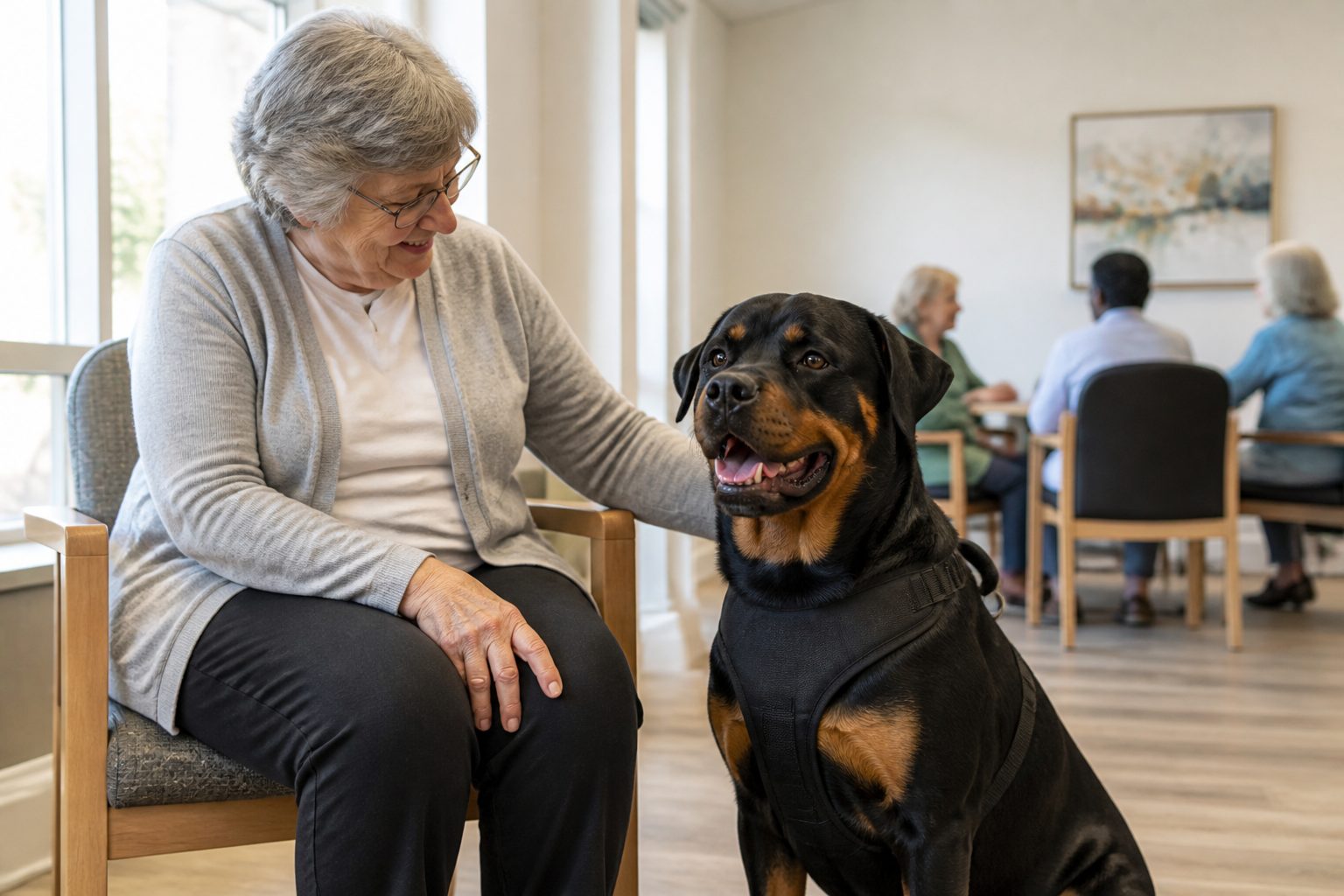
Wynd is one of the clearest examples of a Rottweiler earning recognition through service. According to the American Kennel Club, Wynd received an Award for Canine Excellence in Therapy in 2015. Working with owner Renice Zimmerman, Wynd supported military families through the Tragedy Assistance Program for Survivors, visited veterans at Hampton Veterans Hospital, and participated in a reading program operated by the Suffolk Humane Society.
Therapy work requires more than friendliness. A dog must remain calm around unfamiliar people, unusual sounds, mobility equipment, and changing environments. Wynd’s record demonstrates how a well-socialized and carefully trained Rottweiler can offer steady, reassuring companionship. Readers can find more real examples in our Rottweiler amazing stories.
Dieter: A Veteran’s Service Dog
Dieter is another Rottweiler recognized for helping a person in everyday life. The AKC has highlighted Dieter’s work as a service dog for Vietnam veteran Neil Williams. Service dogs are trained for tasks that support a person with a disability, which is different from the role of a therapy dog that visits and comforts multiple people.
Dieter’s story matters because it challenges a narrow view of the breed. A Rottweiler’s power may be visually striking, but successful service work also depends on focus, emotional steadiness, reliability, and a close partnership with the handler.
Rodsden Berte Von Zederwald: A Multi-Sport Champion
Rodsden Berte Von Zederwald, known as Berte, showed how adaptable a well-trained Rottweiler can be. AKC judge and American Rottweiler Club educator Lew Olson competed with Berte in tracking, herding, agility, obedience, and rally. Berte also earned American and Canadian championship titles and multiple Working Group placements.
No single title tells the whole story. Moving successfully between sports requires a dog to solve different problems, respond to precise cues, and work confidently in busy environments. Berte’s accomplishments are a practical example of the breed’s capacity to learn.
Otis, Desi, and Boris: Quiet Heroes in the Community
Therapy Rottweilers do not always become household names, yet their impact can be deeply personal. The AKC has documented Katie Maess and her Rottweilers Otis and Desi visiting an assisted-living facility, a nursing-skills high school, a vocational agency, and Miami University. Her earlier therapy dog Boris was remembered for gently climbing onto the bed of a frail resident and lying beside her without stepping on her.
Stories like these are valuable because they show the work itself, not just a dramatic label. The dogs were prepared, supervised, and matched to environments where their calm presence could help.
Was Balto a Rottweiler?
No. Balto became famous after leading the final leg of the 1925 serum relay to Nome, Alaska, but reputable historical accounts identify him as a Siberian Husky or as a sled dog with ancestry related to several northern dog populations. There is no credible basis for describing him as half-Rottweiler.
Balto’s story is inspiring, but assigning him to the wrong breed weakens an article that readers expect to trust. Rottweilers have enough documented accomplishments of their own; they do not need another breed’s hero added to their history.
What These Rottweilers Teach Us About the Breed
The dogs above worked in very different settings, but their achievements share several foundations:
- Early socialization: Controlled, positive exposure helps a young dog learn to handle people, places, surfaces, and sounds.
- Consistent training: Rottweilers are intelligent, but intelligence needs patient direction and clear boundaries.
- Suitable work: Obedience, tracking, scent games, carting, and other structured activities provide mental and physical outlets.
- Responsible handling: A large, powerful dog needs an owner who understands canine behavior and manages situations thoughtfully.
- Individual evaluation: Breed tendencies matter, but every dog has a distinct temperament, health history, and level of training.
If you are building those foundations with your own dog, our Rottweiler training articles offer practical guidance for daily life.
Can Any Rottweiler Become a Therapy or Service Dog?
Not every Rottweiler is suited to every job. Therapy and service work require the right temperament, health, training, and professional evaluation. A dog may be an excellent family companion without enjoying crowded public environments. Owners should respect the individual dog rather than pursue a title for appearance or prestige.
For service-dog questions, work with an experienced trainer or organization familiar with disability-related task training and local access laws. For therapy visits, use a reputable program that evaluates both the dog and handler. Our Rottweiler care and health guides can help owners build a responsible everyday routine.
Frequently Asked Questions
What are Rottweilers best known for?
Rottweilers are known for their historic droving and guarding work, their later use in police service, and their modern roles as companions, therapy dogs, service dogs, and dog-sport competitors.
Are Rottweilers easy to train?
They are intelligent and capable learners, but they need consistent, reward-based training and thoughtful socialization. Their size and strength make good manners especially important.
Are Rottweilers good family dogs?
A well-bred, well-socialized, and appropriately trained Rottweiler can be a devoted family companion. Prospective owners should be realistic about exercise, training, supervision, and the responsibilities of living with a powerful working breed.
A Legacy Built on Real Work
The most impressive famous Rottweilers are not defined by exaggerated stories. Wynd, Dieter, Berte, Otis, Desi, and Boris earned recognition through service, sport, and dependable partnership. Their stories reflect the breed at its best: confident, trainable, versatile, and deeply connected to people.